For Chemistry Students
Turn organic chemistry, readings, and lectures into notes that are easier to revisit before class.
chemistry notes
Turn reaction-heavy chemistry chapters, lab notes, and lecture slides into cleaner study notes. Review general chemistry, organic mechanisms, thermodynamics, and equations with AI summaries, flashcards, and quiz-ready takeaways.
Notes ready to study
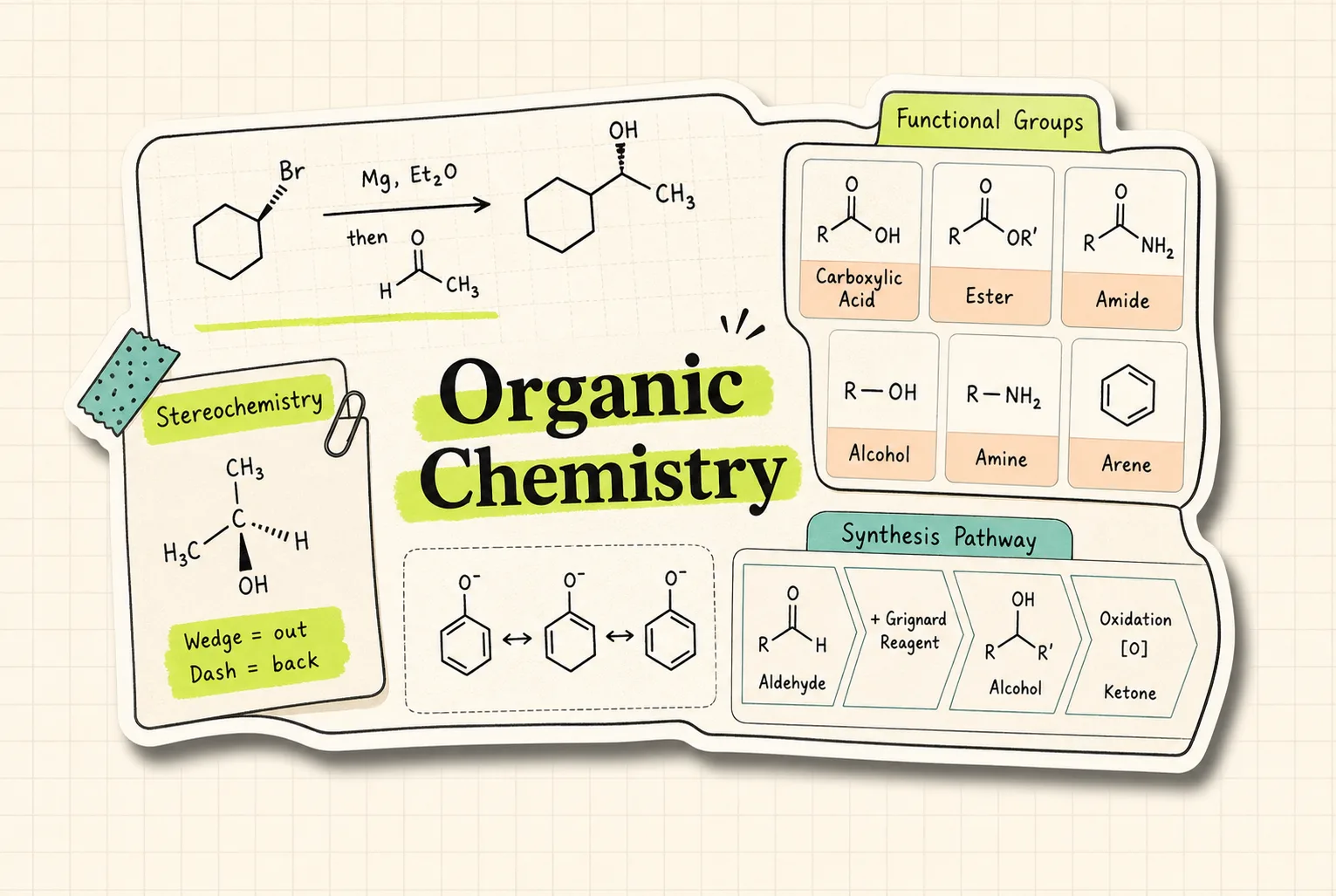
General chemistry review for formulas, units, bonding, reactions, and exam practice.
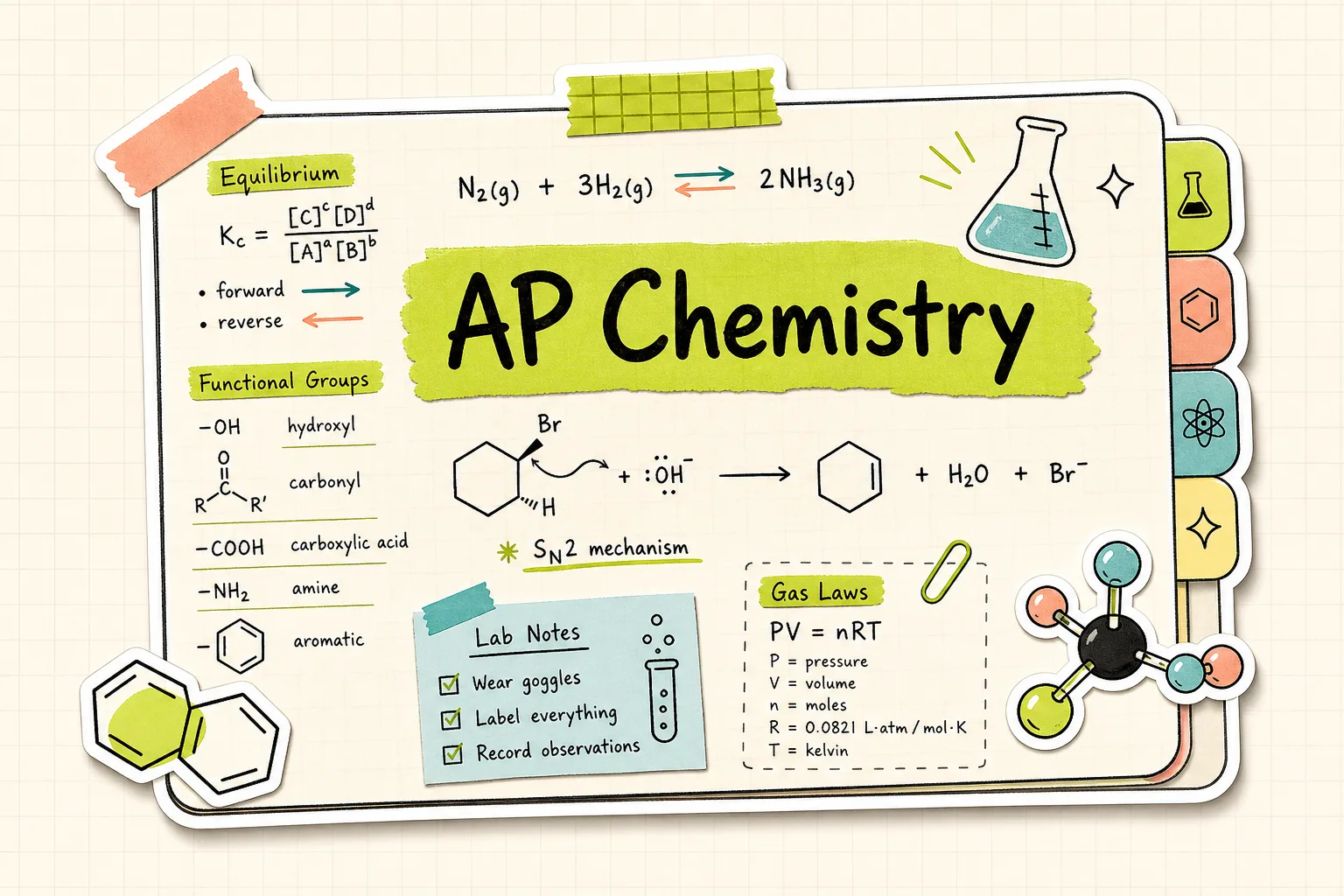
Mechanisms, terms, and reaction patterns converted into review-ready study notes.
Upload a PDF, lecture recording, YouTube link, or chapter scan. ThetaWave reads it end-to-end and rebuilds it as structured notes with headings, bullet points, formulas, and diagrams.
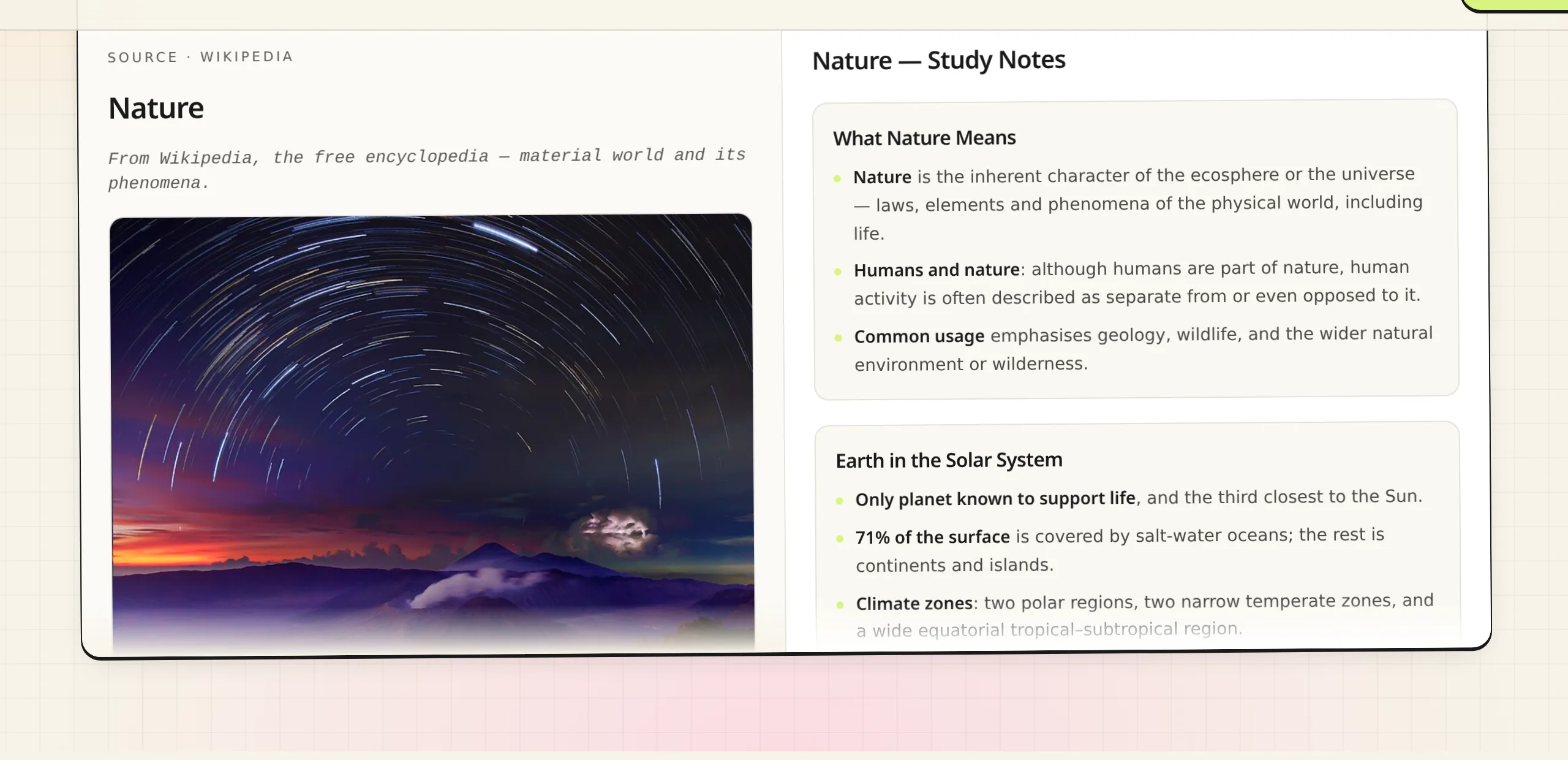
Live demo - ThetaWave AI notes generator
These sections show which concepts and subfields in Chemistry are worth organizing and reviewing first.
01 / 06
Organic Chemistry
Review mechanisms, functional groups, stereochemistry, and synthesis logic in notes that are easier to scan before quizzes and reactions-heavy exams.
ThetaWave helps you carry the same note system into course assessments, review weeks, and exam prep.
01 / 04
AP Chemistry
Use ThetaWave to condense AP Chemistry units into cleaner notes for reactions, equilibrium, kinetics, and free-response review.
From majors and pre-professional tracks to exam crunch and group review, see how students use ThetaWave for Chemistry.
Turn organic chemistry, readings, and lectures into notes that are easier to revisit before class.
Convert AP Chemistry material into flashcards, quizzes, and review notes without rebuilding every source by hand.
Use every upload to build a cleaner review system across organic chemistry and inorganic chemistry.
Turn post-class capture into a 10-minute habit: build a knowledge base that compounds all semester.
Three steps to turn your Chemistry materials into complete chemistry notes, flashcards, and practice quizzes.
Upload a chemistry chapter or slide deck and ThetaWave's notes generator pulls out mechanisms, formulas, definitions, and chapter-level takeaways into cleaner notes.
Convert your chemistry notes into flashcards for reactions, periodic trends, formulas, and lab vocabulary without manually building every review card.
Use the quiz maker to create chemistry review questions from your own material so you can test stoichiometry, bonding, equilibria, and organic chemistry in exam format.
Everything you need to know about Chemistry Notes.
Use ThetaWave to turn Chemistry lectures, readings, and textbooks into clearer notes, flashcards, and practice questions.