Structured Notes for Fluid and Electrolytes Imbalances for Nursing Students
Fluid and Electrolytes Imbalances for Nursing Students is handled as a focused review source for fluid and electrolyte imbalance patterns, symptoms, risks, and nursing responses. The notes begin with Sort the cue into fluid volume or electrolyte pattern and end with Choose the nursing concern before memorizing interventions.
- Sort the cue into fluid volume or electrolyte pattern
- Connect the abnormal pattern to symptoms and risk
- Choose the nursing concern before memorizing interventions
Key takeaways
- Fluid and electrolyte patterns are high-yield nursing concepts that fit mind maps and scenario questions.
- RegisteredNurseRN's 35m focused video gives nursing students preparing for NCLEX-style questions this fluid and electrolyte imbalance patterns, symptoms, risks, and nursing responses path: Sort the cue into fluid volume or electrolyte pattern, then Choose the nursing concern before memorizing interventions.
- Fluid and Electrolytes Imbalances for Nursing Students is treated as a focused nursing and NCLEX review, so the first review action is to Sort the cue into fluid volume or electrolyte pattern.
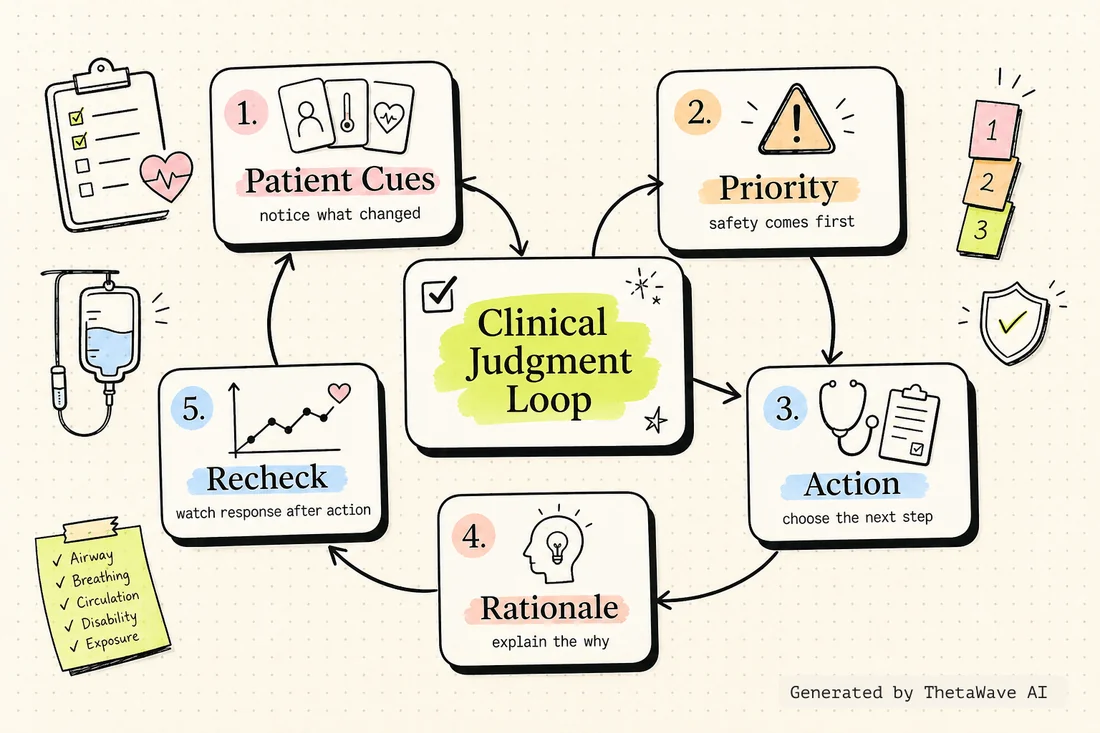
Mind Map - connect fluid shifts, sodium, potassium, calcium, symptoms, and safety
The map for Fluid and Electrolytes Imbalances for Nursing Students turns What imbalance pattern explains the patient cue? into a visible layout, with patient cues, priority, safe action, and rationale acting as the checkpoints around fluid shifts, sodium, potassium, calcium, symptoms, and safety.
- Center of the map: fluid shifts, sodium, potassium, calcium, symptoms, and safety
- Branch cues: patient cues, priority, safe action, and rationale
- Review question kept on the page: What imbalance pattern explains the patient cue?
Quiz - test electrolyte imbalance recognition and nursing priority
For nursing students preparing for NCLEX-style questions, the quiz is useful only if it exposes a weak decision. Here, that weak spot is memorizing symptoms without grouping them by fluid or electrolyte pattern.
- Question focus: electrolyte imbalance recognition and nursing priority
- Mistake to notice: Memorizing symptoms without grouping them by fluid or electrolyte pattern
- Correction to practice: Group symptoms under the imbalance they point to, then link the group to nursing risk.
“Memorizing symptoms without grouping them by fluid or electrolyte pattern” — is this a recommended approach?
Flashcards - repeat fluid balance, electrolyte cues, symptoms, and risks
Cards for this page keep fluid balance, electrolyte cues, symptoms, and risks separate from the longer notes. Each cue helps nursing students preparing for NCLEX-style questions return to patient cues, priority, safety, rationale, and clinical judgment without rewatching the whole video first.
- Front-side cue: fluid balance, electrolyte cues, symptoms, and risks
- Back-side answer: connect the cue to What imbalance pattern explains the patient cue?
- Missed cards point back to this move: Choose the nursing concern before memorizing interventions
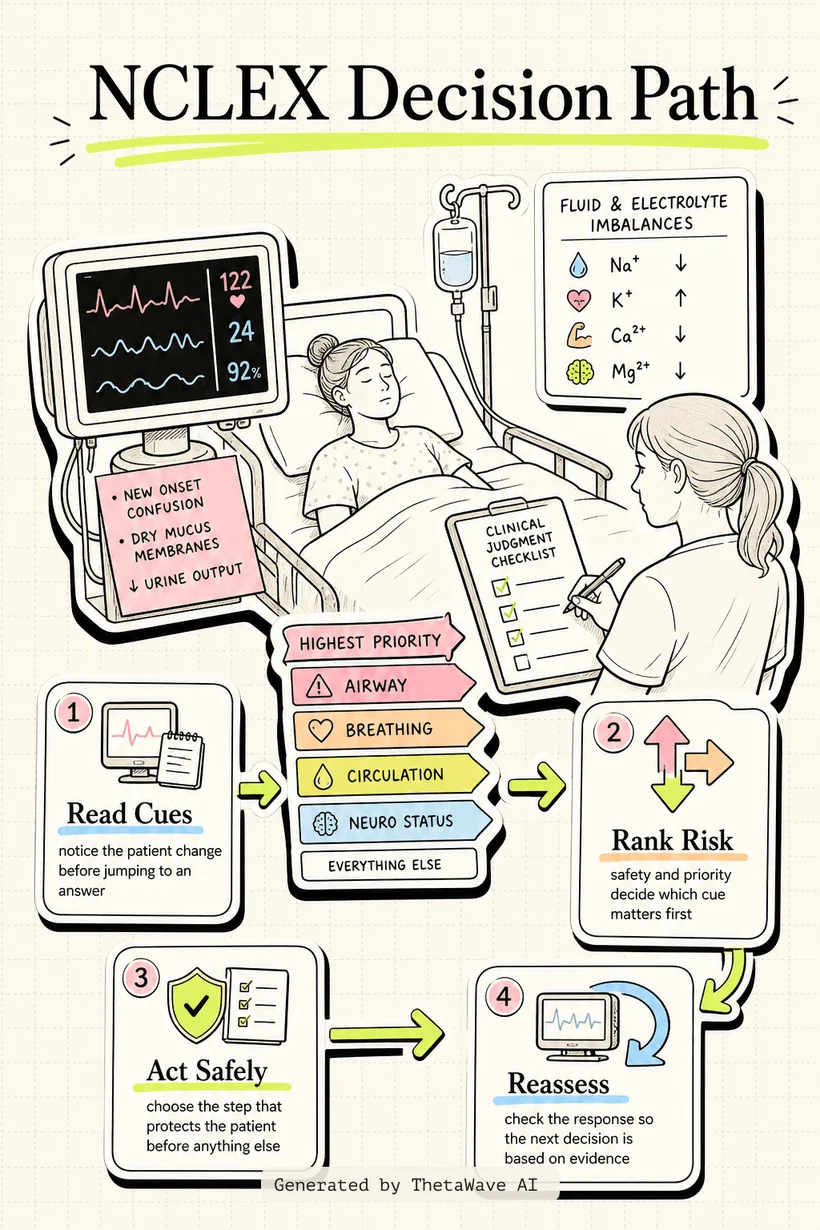
Infographic - a visual summary of an imbalance-to-action nursing review flow
The visual guide for Fluid and Electrolytes Imbalances for Nursing Students explains an imbalance-to-action nursing review flow with a panel sequence: Sort the cue into fluid volume or electrolyte pattern, connect the abnormal pattern to symptoms and risk, and Choose the nursing concern before memorizing interventions.
- Panel sequence: Sort the cue into fluid volume or electrolyte pattern; Connect the abnormal pattern to symptoms and risk; Choose the nursing concern before memorizing interventions
- Visual story: an imbalance-to-action nursing review flow
- Learner action: read the cue, identify risk, choose the safe response, and explain why
Podcast - review how to reason through fluids and electrolytes without drowning in facts
how to reason through fluids and electrolytes without drowning in facts becomes the listening path. The hosts move from Sort the cue into fluid volume or electrolyte pattern toward Choose the nursing concern before memorizing interventions, matching the rest of the study page.
- Opening question: What imbalance pattern explains the patient cue?
- Plain-language recap of Sort the cue into fluid volume or electrolyte pattern
- Closing review cue: Choose the nursing concern before memorizing interventions
Fluid and Electrolytes Imbalances for Nursing Students
Host 1: Fluid and Electrolytes Imbalances for Nursing Students sits in Nursing / NCLEX Notes because it helps nursing students preparing for NCLEX-style questions work on patient cues, priority, safety, rationale, and clinical judgment.
Host 2: Fluid and electrolyte patterns are high-yield nursing concepts that fit mind maps and scenario questions.
More notes for Nursing / NCLEX Notes
Same study format, different source. Compare how ThetaWave turns related material into notes, maps, quizzes, flashcards, and visuals.

1 HR COMPREHENSIVE NCLEX REVIEW
Beautiful Nursing · 2.1M views · 1h22m
A broad NCLEX review that can become high-yield notes, practice questions, and flashcards for last-mile nursing review.

2-Hour Ultimate NCLEX Mastery Course
Your Nursing Space · 371K views · 2h24m
A long NCLEX mastery source that benefits from a structured review path and repeated quiz checks.

45-Minute NCLEX Last-Minute Crash Course
Your Nursing Space · 462K views · 49m
A focused crash course suited to concise notes, weak-area review, and practice questions.

NCLEX 2026 Update: What’s Changing
SimpleNursing · 95K views · 11m
A current NCLEX update that helps students understand what changed and what to review next.
Frequently Asked Questions
Everything you need to know about fluid and electrolytes imbalances for nursing students.
Turn any YouTube video into notes like this.
Paste a YouTube link and get source-based notes, a mind map, quiz, flashcards, infographic, and podcast preview in minutes.