Structured Notes for Physics - Basic Introduction
A broad physics introduction that can organize forces, motion, energy, and equations for review. The notes turn that into a concrete path: Start from the situation and units before choosing an equation; Connect motion, force, energy, and measurement as the first physics map; Use practice checks to decide which relationship is being tested.
- Start from the situation and units before choosing an equation
- Connect motion, force, energy, and measurement as the first physics map
- Use practice checks to decide which relationship is being tested
Key takeaways
- A broad physics introduction that can organize forces, motion, energy, and equations for review.
- The Organic Chemistry Tutor's 54m extended video gives physics and AP Physics students this basic physics introduction through motion, forces, energy, units, and problem setup path: Start from the situation and units before choosing an equation, then use practice checks to decide which relationship is being tested.
- Physics - Basic Introduction is treated as a extended physics review source, so the first review action is to Start from the situation and units before choosing an equation.
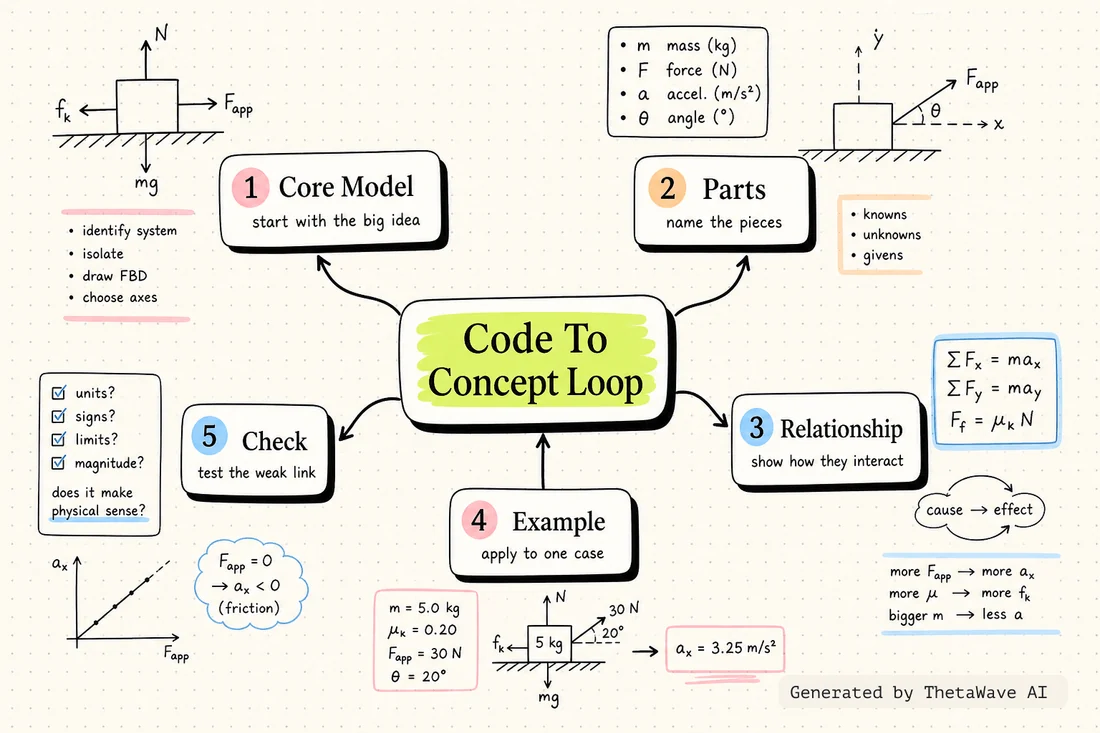
Mind Map - connect basic physics, motion, force, energy, units, and answer checks
basic physics, motion, force, energy, units, and answer checks is the visual anchor for this page. Around it, diagram, relationship, units, and answer check become the review branches that help physics and AP Physics students see what belongs together.
- Center of the map: basic physics, motion, force, energy, units, and answer checks
- Branch cues: diagram, relationship, units, and answer check
- Review question kept on the page: What physical relationship explains the example?
Quiz - test intro physics relationship and unit reasoning
intro physics relationship and unit reasoning is the recall job. A wrong answer is treated as a signal to practice this repair move: Sketch or describe the situation first, then choose the equation.
- Question focus: intro physics relationship and unit reasoning
- Mistake to notice: Choosing a formula before understanding the situation
- Correction to practice: Sketch or describe the situation first, then choose the equation.
“Choosing a formula before understanding the situation” — is this a recommended approach?
Flashcards - repeat physics basics, formulas, quantities, and unit cues
This card set is intentionally narrow: it repeats physics basics, formulas, quantities, and unit cues and points missed answers back to use practice checks to decide which relationship is being tested.
- Front-side cue: physics basics, formulas, quantities, and unit cues
- Back-side answer: connect the cue to What physical relationship explains the example?
- Missed cards point back to this move: use practice checks to decide which relationship is being tested
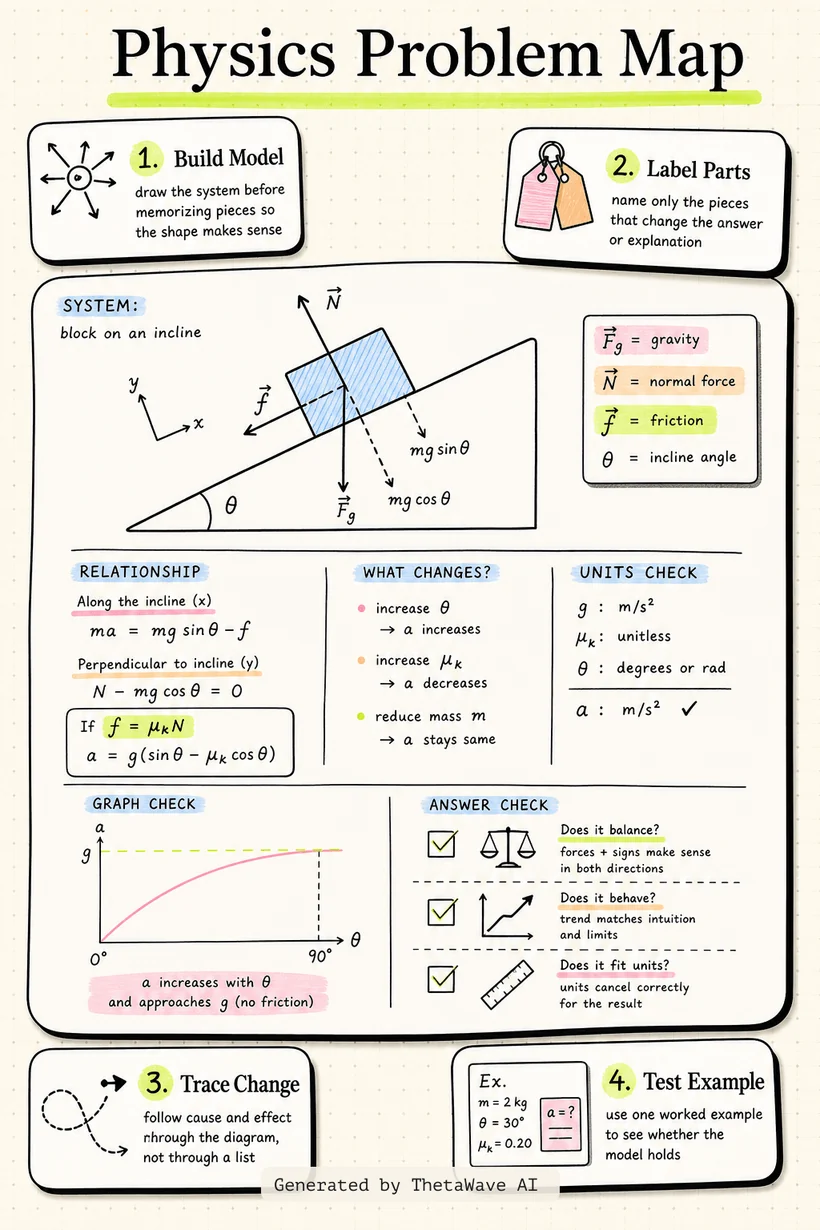
Infographic - a visual summary of a basic physics setup path
The visual poster centers on a basic physics setup path. It shows the review path as panels - Start from the situation and units before choosing an equation, connect motion, force, energy, and measurement as the first physics map, then use practice checks to decide which relationship is being tested - so the topic can be understood quickly before deeper review.
- Panel sequence: Start from the situation and units before choosing an equation; Connect motion, force, energy, and measurement as the first physics map; Use practice checks to decide which relationship is being tested
- Visual story: a basic physics setup path
- Learner action: draw the situation, name the relationship, track units, and check behavior
Podcast - review how to review physics basics by reading the situation first
The spoken recap for Physics - Basic Introduction follows how to review physics basics by reading the situation first, then returns to the question that shapes the page: What physical relationship explains the example?
- Opening question: What physical relationship explains the example?
- Plain-language recap of Start from the situation and units before choosing an equation
- Closing review cue: use practice checks to decide which relationship is being tested
Physics - Basic Introduction
Host 1: Physics - Basic Introduction sits in Physics / AP Physics Notes because it helps physics and AP Physics students work on relationships, diagrams, equations, units, and problem checks.
Host 2: A broad physics introduction that can organize forces, motion, energy, and equations for review.
More notes for Physics / AP Physics Notes
Same study format, different source. Compare how ThetaWave turns related material into notes, maps, quizzes, flashcards, and visuals.
Physics 1 Final Exam Review
The Organic Chemistry Tutor · 1.1M views · 1h59m
A long final exam review suited to formulas, problem types, and practice checks.
How to study PHYSICS so FAST
simple, actually · 615K views · 4m
A focused physics study-method video that connects problem practice, concepts, and review habits.

AP Physics 1 Exam Cram
Flipping Physics · 295K views · 32m
An AP Physics cram session that can become a formula map and rapid practice page.
Ultimate AP Physics 1 Review
We Are Showboat · 100K views · 2h17m
A long AP Physics review that supports structured notes, formula flashcards, and exam-style quiz checks.
Frequently Asked Questions
Everything you need to know about physics - basic introduction.
Turn any YouTube video into notes like this.
Paste a YouTube link and get source-based notes, a mind map, quiz, flashcards, infographic, and podcast preview in minutes.