Structured Notes for Psychological Research: Crash Course Psychology #2
CrashCourse's video is summarized around psychological research methods organized by experiments, correlation, bias, ethics, and evidence. The notes keep the review practical by asking the learner to check the design before accepting the conclusion.
- Separate experimental claims from correlational observations
- Track variables, bias, samples, ethics, and conclusions
- Use quiz checks to decide what a study can and cannot prove
Key takeaways
- Research methods are central to psychology exams and work well as terms, examples, and quiz questions.
- CrashCourse's 11m compact video gives psychology and AP Psychology students this psychological research methods organized by experiments, correlation, bias, ethics, and evidence path: Separate experimental claims from correlational observations, then use quiz checks to decide what a study can and cannot prove.
- Psychological Research: Crash Course Psychology #2 is treated as a compact psychology review source, so the first review action is to Separate experimental claims from correlational observations.
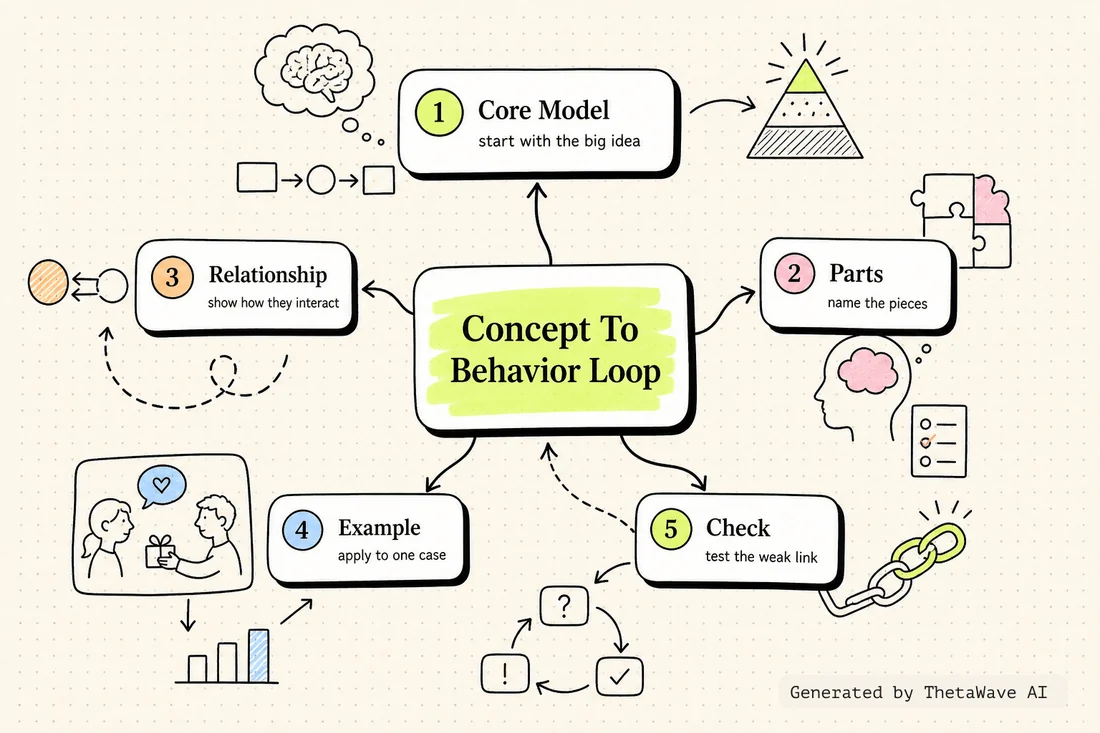
Mind Map - connect research methods, variables, correlation, experiments, bias, ethics, and evidence limits
For Psychological Research: Crash Course Psychology #2, the map starts with research methods, variables, correlation, experiments, bias, ethics, and evidence limits. The supporting branches use concept, research method, behavior, and application, which keeps the visual review tied to the page's main question: What kind of evidence does this psychology study provide?
- Center of the map: research methods, variables, correlation, experiments, bias, ethics, and evidence limits
- Branch cues: concept, research method, behavior, and application
- Review question kept on the page: What kind of evidence does this psychology study provide?
Quiz - test psychology research design and evidence interpretation
The quiz for this page asks about psychology research design and evidence interpretation, then shows why reading a psychology finding as causal when the method only shows correlation leads the learner away from the source's main study goal.
- Question focus: psychology research design and evidence interpretation
- Mistake to notice: Reading a psychology finding as causal when the method only shows correlation
- Correction to practice: Check the design before accepting the conclusion.
“Reading a psychology finding as causal when the method only shows correlation” — is this a recommended approach?
Flashcards - repeat research-method terms, variable types, bias cues, and ethics rules
research-method terms, variable types, bias cues, and ethics rules become the repeatable memory layer. The goal is to make match each term to a behavior, study design, or contrast concept easier on the next review attempt.
- Front-side cue: research-method terms, variable types, bias cues, and ethics rules
- Back-side answer: connect the cue to What kind of evidence does this psychology study provide?
- Missed cards point back to this move: use quiz checks to decide what a study can and cannot prove
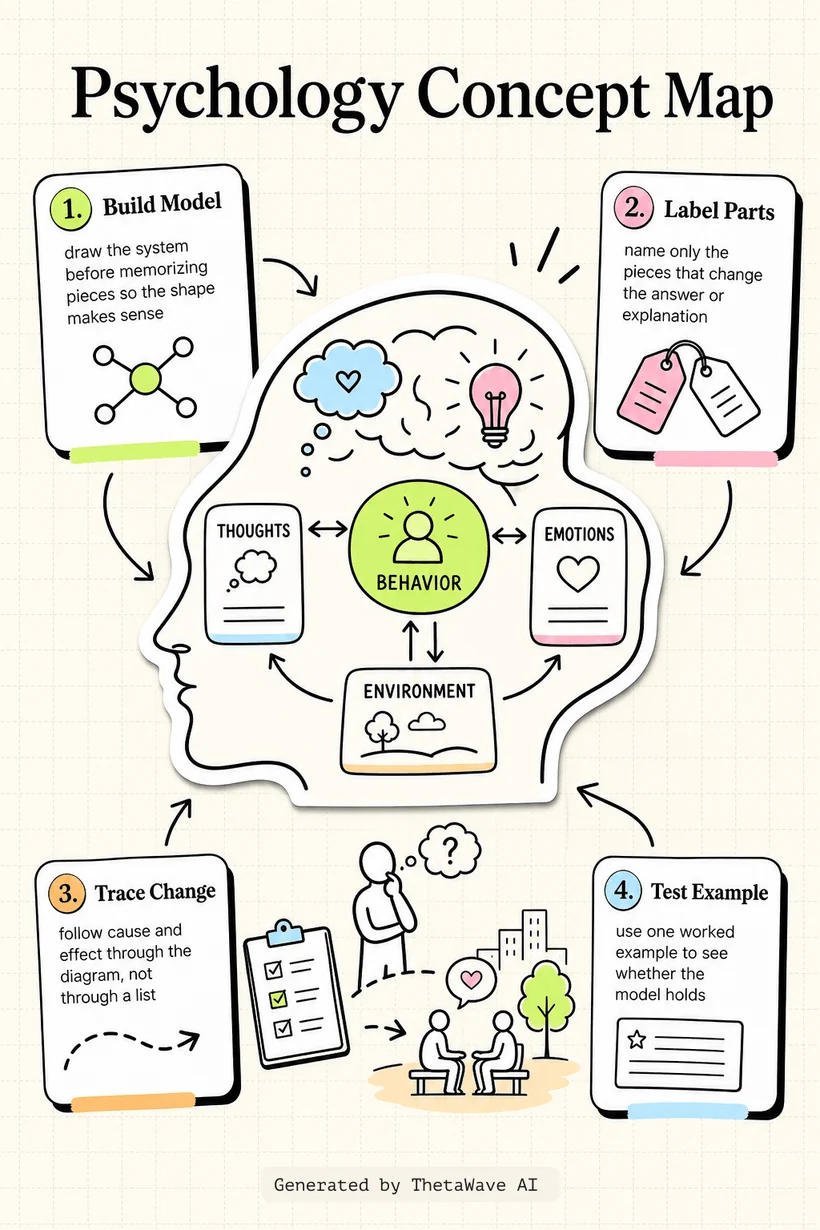
Infographic - a visual summary of a psychology research method decision map
The infographic gives psychology and AP Psychology students a quick visual route through a psychology research method decision map, then sends deeper review back to the notes, quiz, and cards.
- Panel sequence: Separate experimental claims from correlational observations; Track variables, bias, samples, ethics, and conclusions; Use quiz checks to decide what a study can and cannot prove
- Visual story: a psychology research method decision map
- Learner action: match each term to a behavior, study design, or contrast concept
Podcast - review how to review research methods without overclaiming the result
The audio-style preview uses how to review research methods without overclaiming the result as a short review conversation. It keeps the recap close to Psychological Research: Crash Course Psychology #2, then points the learner back to CrashCourse's full video for depth.
- Opening question: What kind of evidence does this psychology study provide?
- Plain-language recap of Separate experimental claims from correlational observations
- Closing review cue: use quiz checks to decide what a study can and cannot prove
Psychological Research: Crash Course Psychology #2
Host 1: Psychological Research: Crash Course Psychology #2 sits in Psychology / AP Psychology Notes because it helps psychology and AP Psychology students work on concepts, research methods, behavior examples, and application questions.
Host 2: Research methods are central to psychology exams and work well as terms, examples, and quiz questions.
More notes for Psychology / AP Psychology Notes
Same study format, different source. Compare how ThetaWave turns related material into notes, maps, quizzes, flashcards, and visuals.
Intro to Psychology: Crash Course Psychology #1
CrashCourse · 17.2M views · 11m
A high-reach psychology introduction that can ground the topic before AP unit review.

AP Psychology Unit 1 Review
Mr. Sinn · 447K views · 1h08m
A focused AP unit review that can become structured notes and flashcards for key concepts.
AP Psychology FULL Course Review
Get Psyched with Tim Steadman · 113K views · 2h05m
A full AP Psychology review source with enough structure for unit maps and exam checks.
AP Psychology: Everything You Need To Know
Mr. Sinn · 193K views · 1h45m
A current AP Psychology review that supports terms, researchers, and application questions.
Frequently Asked Questions
Everything you need to know about psychological research: crash course psychology #2.
Turn any YouTube video into notes like this.
Paste a YouTube link and get source-based notes, a mind map, quiz, flashcards, infographic, and podcast preview in minutes.