Structured Notes for A Simple Way to Break a Bad Habit
A Simple Way to Break a Bad Habit is organized around habit loops and mindful curiosity. The notes keep curiosity interrupts habit loops visible, then move through defines trigger, behavior, and reward and shows how curiosity changes the loop.
- Defines trigger, behavior, and reward
- Shows how curiosity changes the loop
- Keeps the talk practical and example-ready
Key takeaways
- Bad habits can be studied as loops: trigger, behavior, and reward.
- Curiosity changes the relationship to craving by making the habit observable.
- The point is not to shame the behavior; it is to see the loop clearly enough to change it.
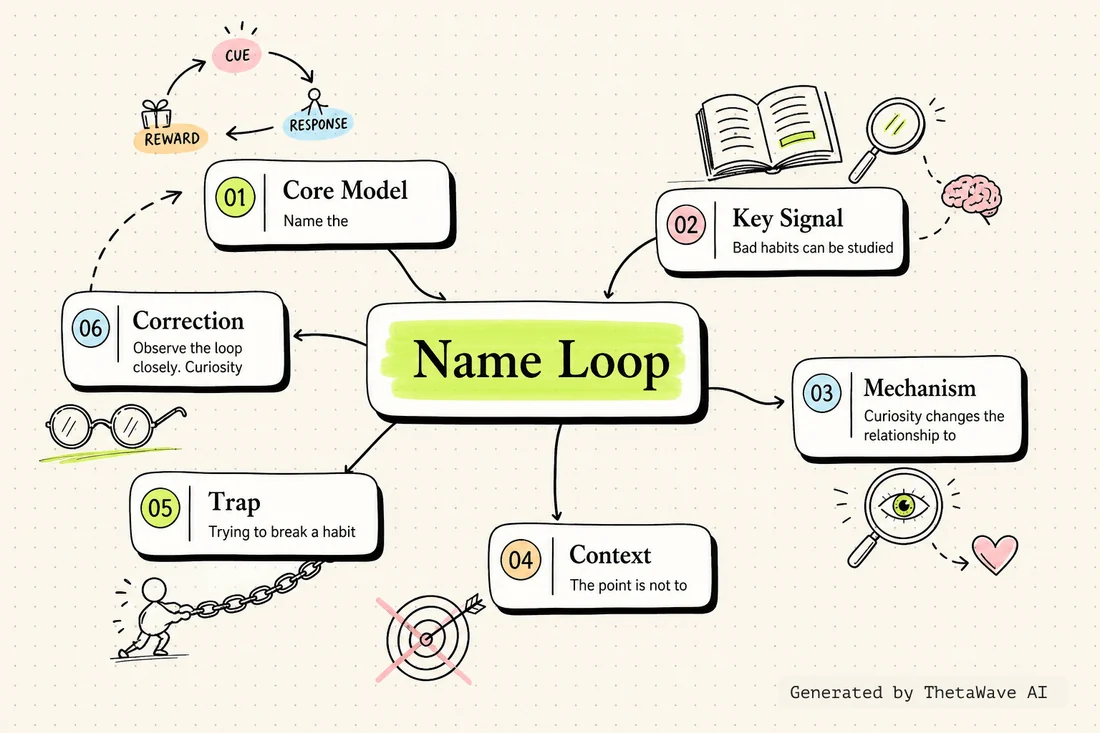
Mind Map - see the habit loop at a glance
the habit loop becomes the center of the map, with branches for visualizes the automatic loop and the curiosity interruption, makes the concept reviewable in seconds, and useful for psychology or behavior-change study.
- Visualizes the automatic loop and the curiosity interruption
- Makes the concept reviewable in seconds
- Useful for psychology or behavior-change study
Quiz - test your grasp of habit-loop mechanics
The quiz asks the learner to use habit-loop mechanics in context. The answer feedback points back to trying to break a habit only through willpower and the repair move: Observe the loop closely. Curiosity weakens automatic behavior by making the reward and craving visible..
- Asks you to identify each loop component
- Tests willpower vs curiosity
- Reviews the role of mindful observation
“Trying to break a habit only through willpower” — is this a recommended approach?
Flashcards - repeat trigger, behavior, reward
trigger, behavior, reward become short front/back cards. The cards are tuned to name the loop, so a missed answer points back to the idea that needs another pass.
- Cards for loop vocabulary
- Back side explains how to apply curiosity
- Useful for habit-change review
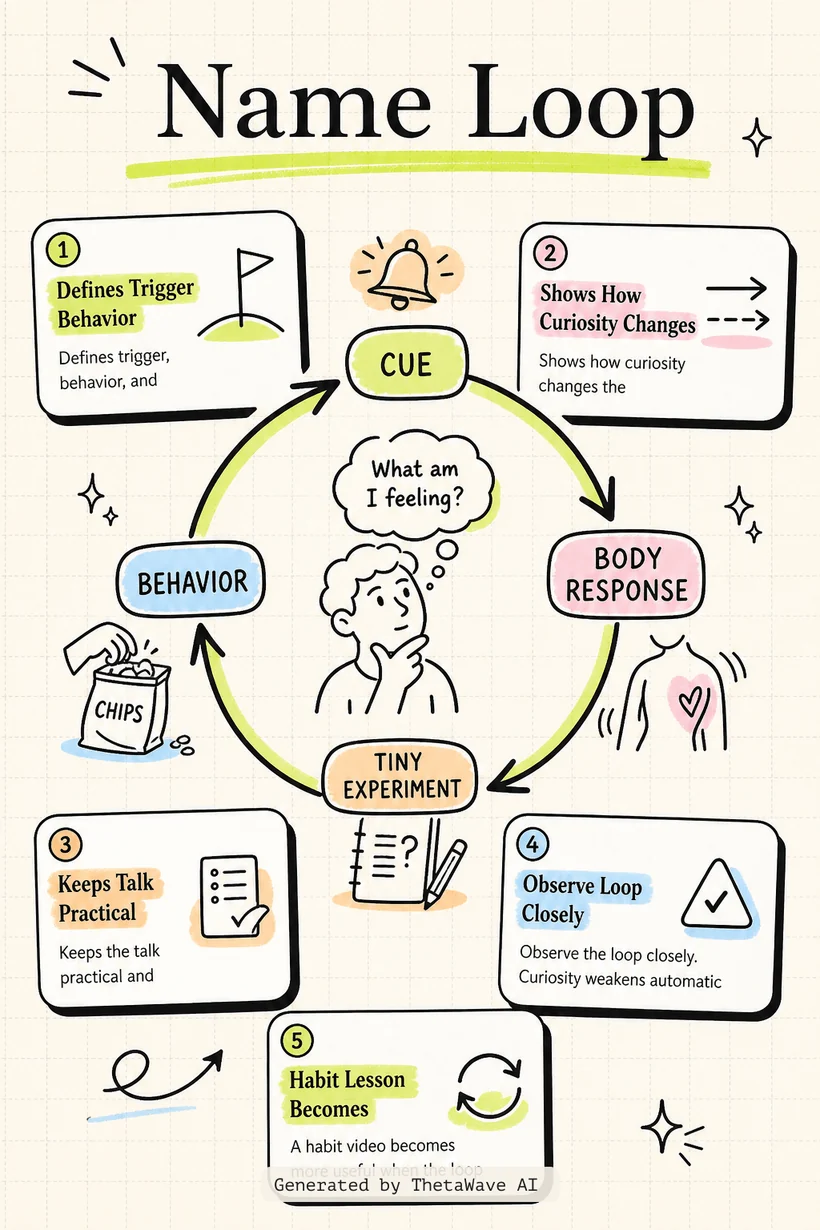
Infographic - a visual summary of breaking a bad habit
The infographic explains breaking a bad habit as a visual sequence. It is meant to make curiosity interrupts habit loops easier to grasp before the learner moves into notes, quiz, or cards.
- A visual path from trigger to behavior to reward
- Shows where curiosity enters the loop
- Keeps the TED lesson concrete
Podcast - listen to the habit loop recap
habit loop becomes a short review conversation. It follows the same learning target as the page: name the loop.
- Recap explains the loop in plain language
- Contrasts willpower with observation
- Good for reviewing behavior change
A Simple Way to Break a Bad Habit | Judson Brewer | TED
Host 1: Judson Brewer makes habits easier to study by turning them into a loop.
Host 2: The loop is trigger, behavior, reward. Once you can see those parts, the habit is less mysterious.
More notes for TED: Brain, Habits & Study
Same study format, different source. Compare how ThetaWave turns related material into notes, maps, quizzes, flashcards, and visuals.

How to Make Stress Your Friend | Kelly McGonigal | TED
TED · 17.3M views · 14m
A high-reach talk that reframes stress into a learnable model for mindset, body response, and behavior.

The Brain-Changing Benefits of Exercise | Wendy Suzuki | TED
TED · 11.9M views · 13m
Links exercise to brain change and memory in a short format that students can quickly review.
3 tips on how to study effectively
TED-Ed · 8.3M views · 5m
Direct study advice that maps tightly to active recall, spacing, and practical review questions.

how to study less and get higher grades
Gohar Khan · 5.8M views · 11m
Student-facing study strategy with a clear outcome, making it useful for quick notes and checklist-style review.
Frequently Asked Questions
Everything you need to know about a simple way to break a bad habit | judson brewer | ted.
Turn any YouTube video into notes like this.
Paste a YouTube link and get source-based notes, a mind map, quiz, flashcards, infographic, and podcast preview in minutes.