Structured Notes for How I memorised 400 pages of notes in 24 hours using AI
A high-pressure study outline that turns a massive note stack into themes, priorities, recall checks, and repair tasks.
- Compress the material into major themes before rereading
- Prioritize what is most likely to matter or be forgotten
- Use quick recall checks to decide what needs repair
Key takeaways
- The video is useful because it shows AI under time pressure: the problem is not reading everything, it is deciding what to review first.
- AI can help compress and prioritize a large note stack, but the learner still needs recall checks to know what is actually remembered.
- The page separates emergency triage from normal studying so the tactic does not become a default lazy workflow.
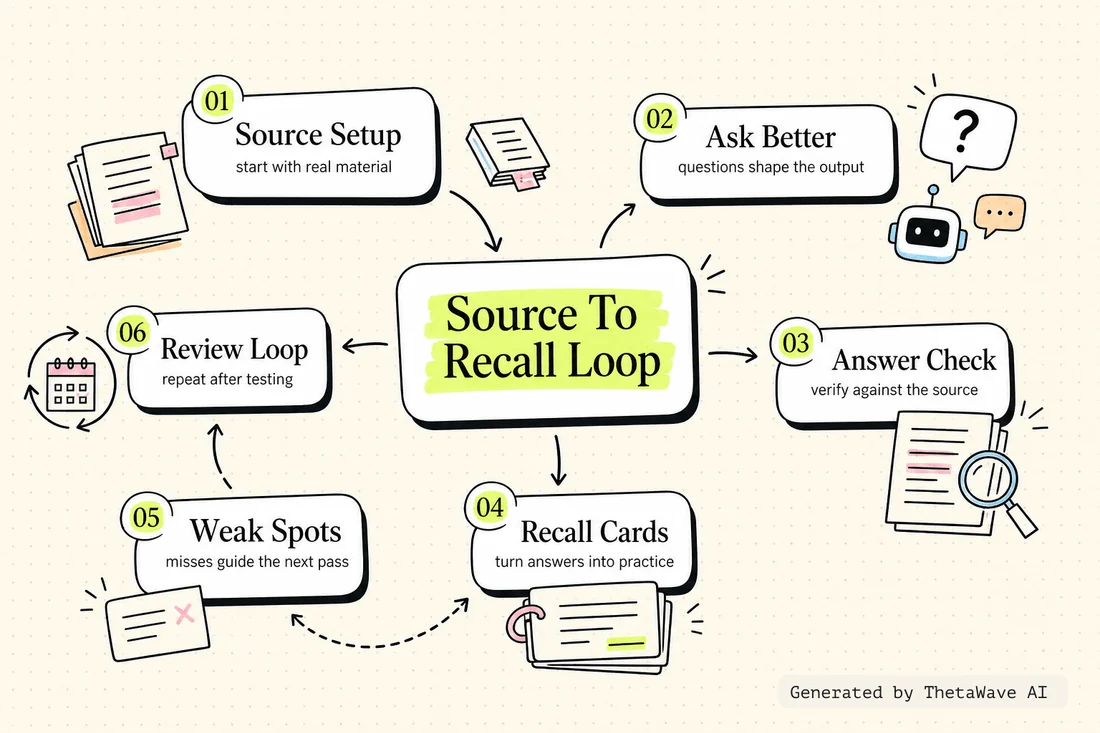
Mind Map - from note pile to recall sprint
The map centers on the emergency workflow: source pile, compression, priority list, recall sprint, gap repair, and final review.
- Shows how a huge reading load becomes smaller review targets
- Separates prioritization from memorization
- Keeps gap repair visible after each recall attempt
Quiz - check whether compressed notes still make sense
This recall check asks whether a compressed point preserves the important idea and can be answered without the full notes open.
- Tests high-yield themes first
- Checks if a short summary still contains the examinable point
- Uses wrong answers to choose the next repair pass
“Using AI compression as a replacement for retrieval practice” — is this a recommended approach?
Flashcards - high-yield recall targets
Cards focus on the compressed questions most worth reviewing under time pressure.
- One card for one high-risk fact, concept, or distinction
- Back side includes the repair note, not just the compressed answer
- Useful for the final pass after triage
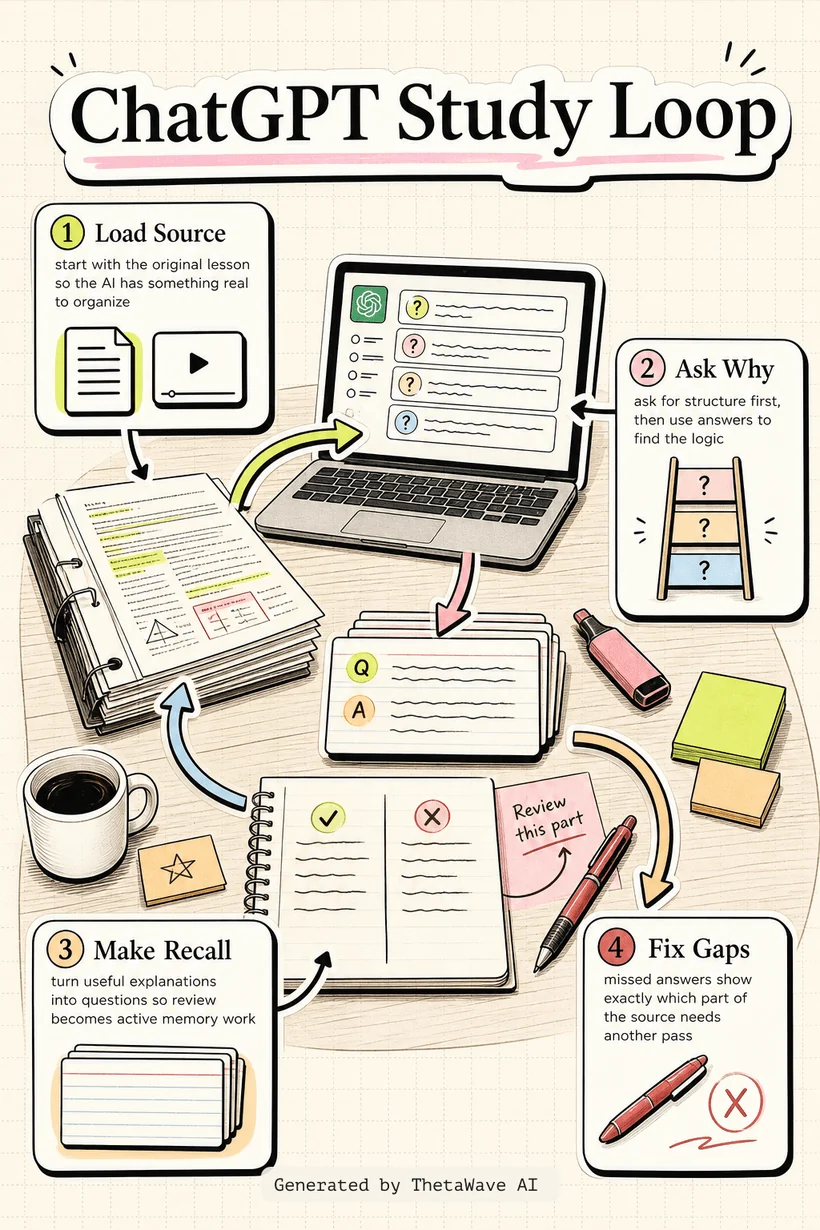
Infographic - the 400-page triage workflow
The visual explainer shows how AI can help move from a large note pile to a smaller set of recall targets without skipping the testing step.
- Makes the emergency sequence easy to scan
- Shows why compression must lead to recall
- Separates last-minute triage from normal long-term studying
Podcast - using AI to triage notes without replacing recall
A two-host recap explains how to use ChatGPT for prioritization under time pressure while keeping retrieval practice at the center.
- Explains when compression helps
- Warns against treating compressed notes as memorized knowledge
- Ends with a quick emergency review loop
How I memorised 400 pages of notes in 24 hours using AI (ChatGPT)
Host 1: The headline is dramatic: 400 pages in 24 hours. But the useful study idea is triage.
Host 2: Exactly. AI can help compress the pile and choose what to review first, but it cannot replace recall.
More notes for AI Study Tools
Same study format, different source. Compare how ThetaWave turns related material into notes, maps, quizzes, flashcards, and visuals.

ChatGPT Study Mode Explained
Justin Sung · 276K views · 21m
Explains how AI study mode changes the way students ask questions, practice recall, and review material.

How to Learn FASTER With AI - Google NotebookLM
Justin Sung · 214K views · 44m
Shows how students can turn source material into summaries, explanations, and review steps.

how I’d use NotebookLM for studying to learn ANY subject
Penolopie · 139K views · 6m
A student-facing NotebookLM workflow that shows how one tool can support learning across subjects.

I Used ChatGPT for 7 Days to Study – It Actually Worked!
Aakashh B · 80K views · 12m
A concrete AI studying experiment that can be turned into workflow notes and practice reflections.
Frequently Asked Questions
Everything you need to know about how i memorised 400 pages of notes in 24 hours using ai (chatgpt).
Turn any YouTube video into notes like this.
Paste a YouTube link and get source-based notes, a mind map, quiz, flashcards, infographic, and podcast preview in minutes.