Structured Notes for How to Learn FASTER With AI - Google NotebookLM
A source-first outline of the video, built around how NotebookLM can move from material intake to explanations, examples, and review questions.
- Load the class material before asking NotebookLM to explain anything
- Ask for structure first so the source becomes easier to navigate
- Turn summaries and examples into recall checks instead of stopping at reading
Key takeaways
- NotebookLM is strongest when the source material leads the session. Start with the document, lecture, or reading before asking broad questions.
- The learning value comes from turning source answers into review steps: summaries, examples, weak spots, and recall questions.
- A good NotebookLM workflow should still end with self-testing. Reading a generated explanation is not the same as being able to retrieve it.
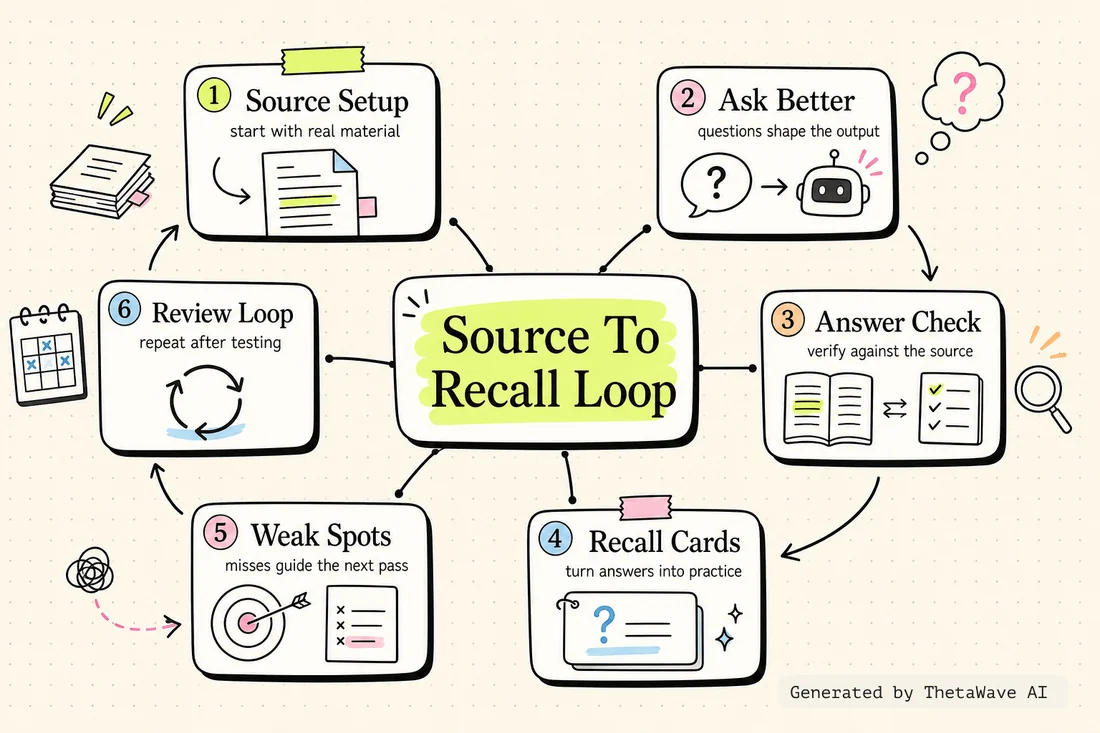
Mind Map - source material into a study loop
The map follows the source from upload to summary, questions, weak spots, examples, and review tasks.
- Shows how the source stays connected to each AI output
- Separates understanding work from review work
- Makes the next study action visible after each NotebookLM answer
Quiz - check whether the source actually stuck
The quiz is framed around source fidelity and recall: can the learner answer from memory, and does the answer still match the uploaded material?
- Tests whether a summary can be turned into a specific answer
- Checks if examples are tied back to the original material
- Uses mistakes to decide what needs another NotebookLM pass
“Using NotebookLM like a generic chatbot before giving it the source” — is this a recommended approach?
Flashcards - convert NotebookLM answers into review cards
Cards focus on the facts, distinctions, and examples that came out of the source-first workflow.
- One card for one concept, definition, or source-based example
- Back side should preserve the source meaning, not a generic paraphrase
- Cards are saved only after the learner checks whether the answer is useful
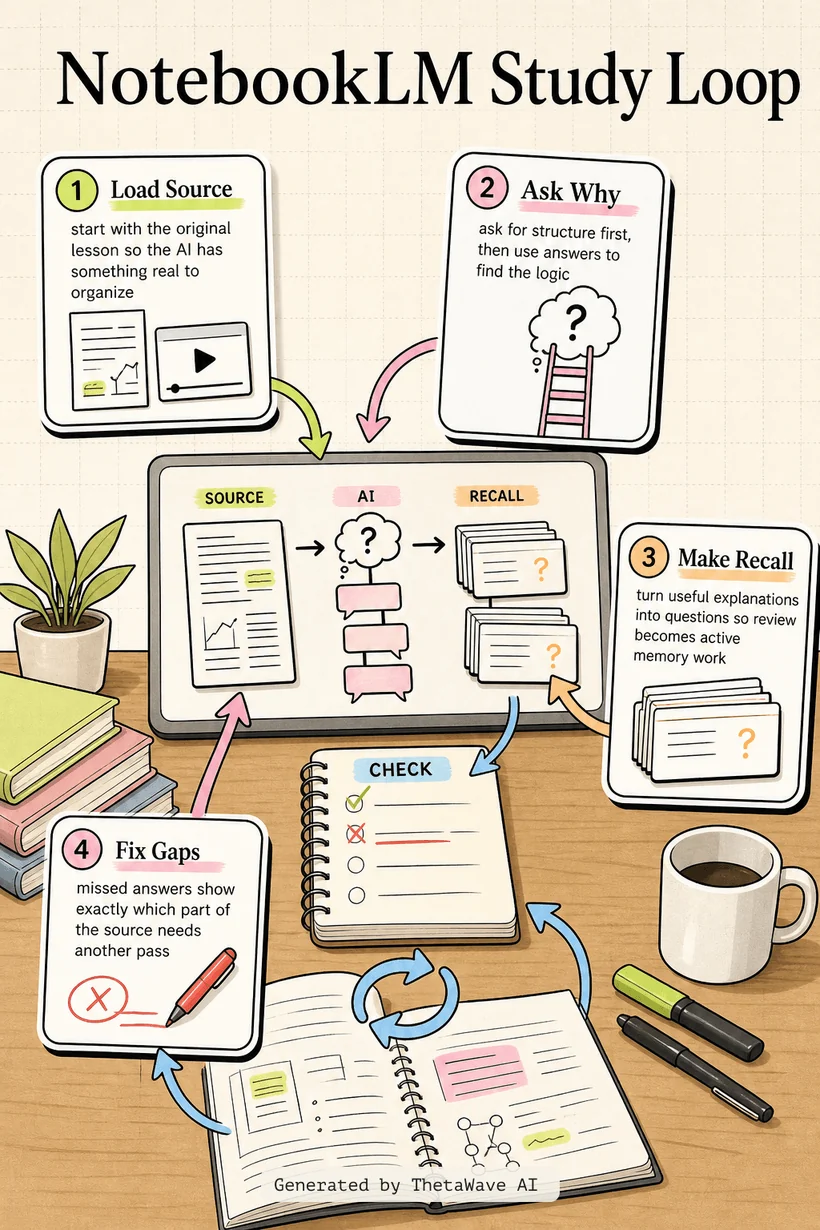
Infographic - the NotebookLM source-to-review path
The visual explainer shows the path from uploaded source to structured overview, targeted questions, examples, recall checks, and a cleaner review list.
- Shows why source upload comes before broad question-asking
- Turns the video into a visible workflow students can repeat
- Keeps self-testing as the final step, not an optional extra
Podcast - why the source should lead the AI session
A two-host recap explains why NotebookLM is useful for studying when it organizes real material into questions and review tasks.
- Contrasts source-first studying with generic AI explanation
- Explains how summaries become useful only when turned into retrieval
- Ends with a repeatable NotebookLM study routine
How to Learn FASTER With AI - Google NotebookLM
Host 1: The useful idea in this NotebookLM video is that the source has to lead the study session.
Host 2: Right. If the student starts with a broad AI question, they may get an explanation, but it may not match the actual class material.
More notes for AI Study Tools
Same study format, different source. Compare how ThetaWave turns related material into notes, maps, quizzes, flashcards, and visuals.
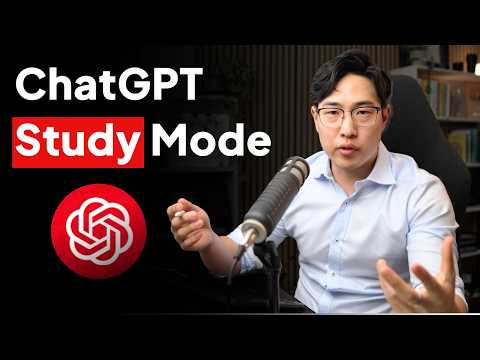
ChatGPT Study Mode Explained
Justin Sung · 276K views · 21m
Explains how AI study mode changes the way students ask questions, practice recall, and review material.
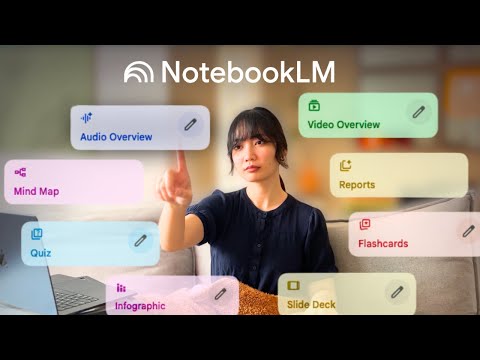
how I’d use NotebookLM for studying to learn ANY subject
Penolopie · 139K views · 6m
A student-facing NotebookLM workflow that shows how one tool can support learning across subjects.

I Used ChatGPT for 7 Days to Study – It Actually Worked!
Aakashh B · 80K views · 12m
A concrete AI studying experiment that can be turned into workflow notes and practice reflections.

How to Make Anki Flashcards 10x Faster with AI (for free!)
Ray Amjad · 325K views · 10m
A practical AI flashcard workflow that helps students compare card creation speed with active recall quality.
Frequently Asked Questions
Everything you need to know about how to learn faster with ai - google notebooklm.
Turn any YouTube video into notes like this.
Paste a YouTube link and get source-based notes, a mind map, quiz, flashcards, infographic, and podcast preview in minutes.