Structured Notes for Lila Landowski's 6 secrets to learning faster
The 18-minute TEDx talk rewritten into a study checklist: attention, alertness, sleep, repetition, breaks, and mistakes.
- Why neuroplasticity needs the right learning conditions
- How sleep, spacing, and breaks prevent fragile memories from being overwritten
- Why mistakes and early quizzes help instead of proving failure
Key takeaways
- The talk's six ingredients are explicit: attention, alertness, sleep, repetition, breaks, and mistakes.
- Attention decides what gets retained. Landowski points to single-task focus, reduced phone switching, focused attention meditation, and even exercise as attention support.
- Alertness matters, but the dose matters: exercise, cold exposure, breathing, small stressors, and caffeine can help; chronic stress harms learning and memory.
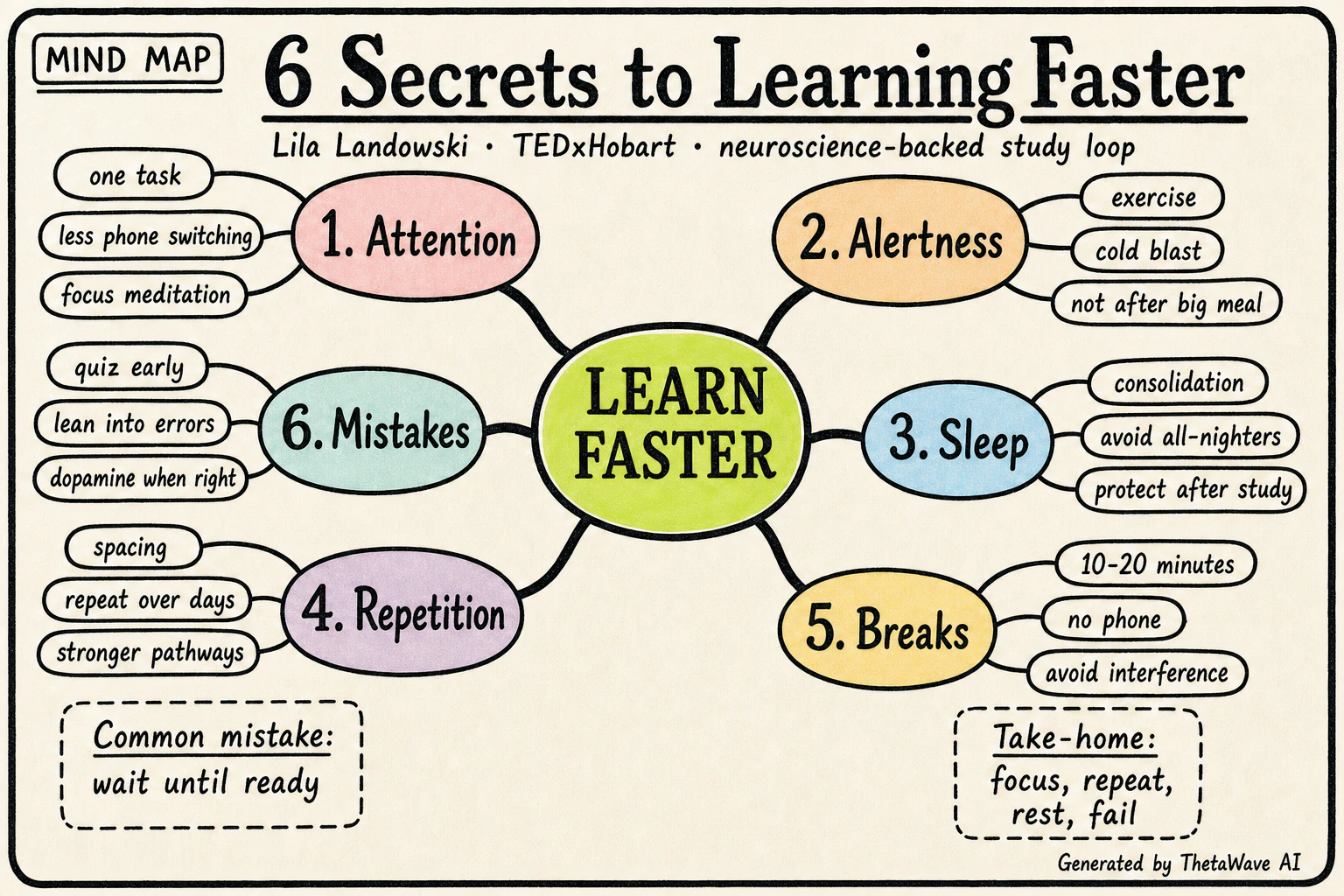
Mind Map — see the six learning ingredients at a glance
The map keeps Landowski's six-ingredient structure intact, with short child notes for the practical actions attached to each branch.
- Attention, alertness, sleep, repetition, breaks, and mistakes are all visible
- Capsules show concrete actions like no phone, spacing, and 10-20 minute breaks
- Useful as a pre-study checklist
Quiz — test the six neuroscience-backed learning ingredients
Active recall turns the TEDx talk into checks on attention, all-nighters, breaks, mistakes, and spacing.
- True/False on cramming and all-nighters
- Short questions on why breaks and mistakes help
- Fixes explain the mechanism from the talk
“Waiting until you feel ready before testing yourself” — is this a recommended approach?
Flashcards — rehearse the six-part learning loop
Each card pairs one ingredient with a practical move: remove distractions, move before study, sleep, space repetition, rest quietly, and quiz early.
- One card for each ingredient in the TEDx framework
- Back side explains the action in plain language
- Designed for quick review before a study session
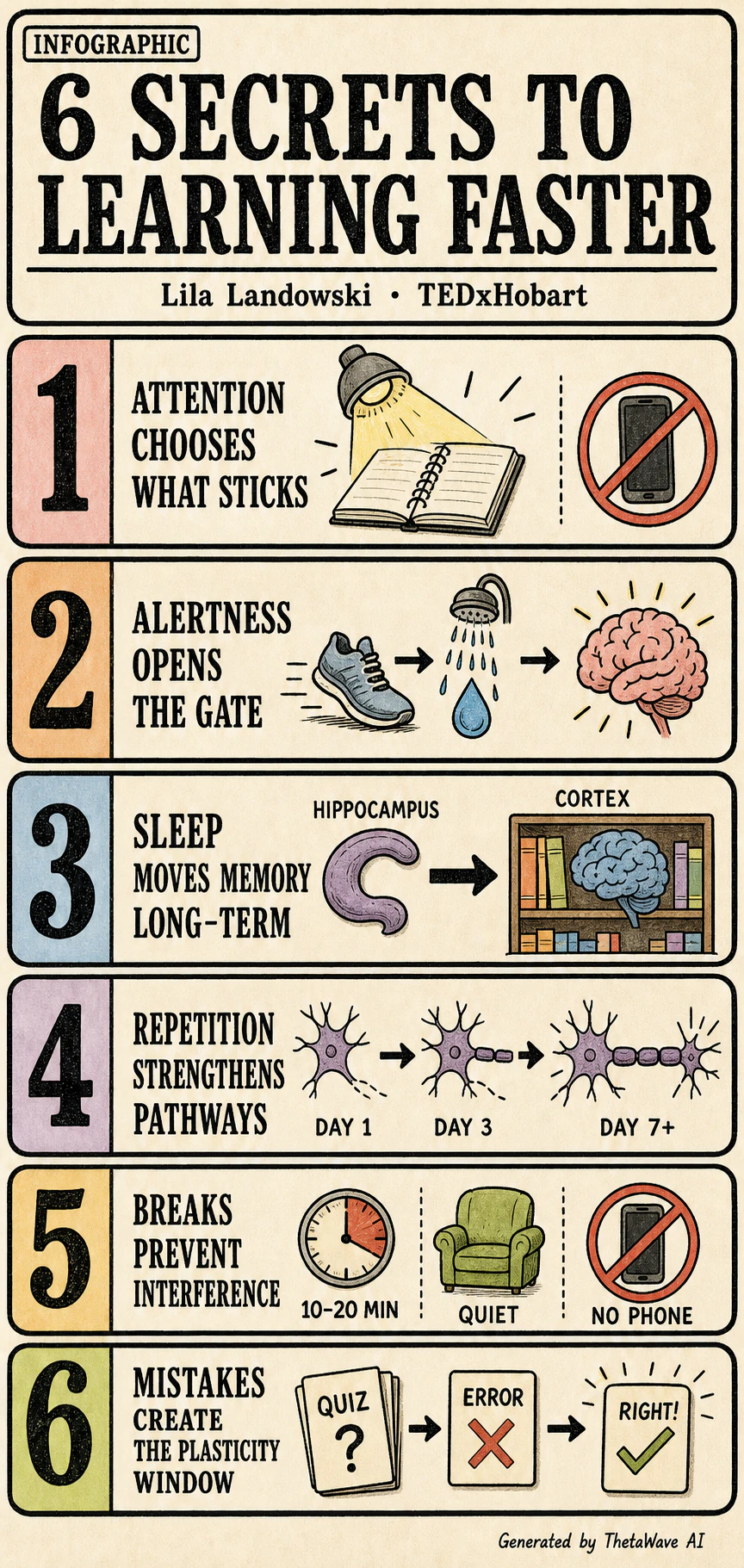
Infographic — a visual poster for learning faster
The poster stacks the six ingredients as a classroom explainer: attention chooses, alertness opens, sleep moves, repetition strengthens, breaks protect, mistakes unlock.
- Follows the talk's six-part structure from attention to mistakes
- Text stays short so the learning sequence is readable
- Makes the study loop easy to remember before a work session
Podcast — listen to the 6 secrets recap
A short two-host walkthrough turns the TEDx talk into an easy review before your next study block.
- Covers each of the six ingredients in order
- Explains why breaks and mistakes are part of learning
- Plays in your browser and stays based on the original talk
Brain Hack: 6 secrets to learning faster, backed by neuroscience | Lila Landowski | TEDxHobart
Host 1: Landowski's TEDx talk is useful because she names the six ingredients directly: attention, alertness, sleep, repetition, breaks, and mistakes.
Host 2: And each one maps to a practical move. Put the phone away, raise alertness gently, and do not study after a giant meal.
More notes for Learning Science
Same study format, different source. Compare how ThetaWave turns related material into notes, maps, quizzes, flashcards, and visuals.
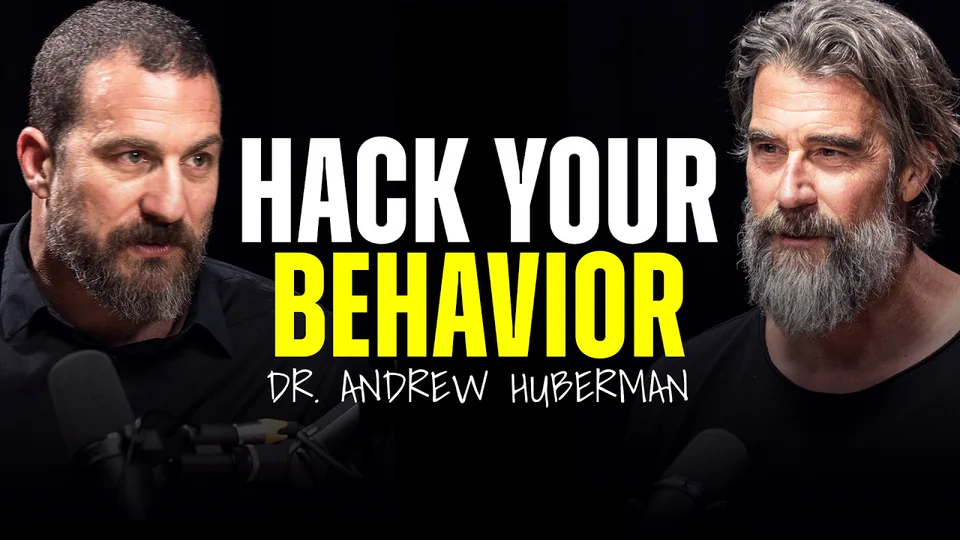
Change Your Brain: Neuroscientist Dr. Andrew Huberman | Rich Roll Podcast
Rich Roll · 18.4M views · 2h13m
Start with the big picture: how brain state, focus, dopamine, stress control, and deep rest shape behavior change.
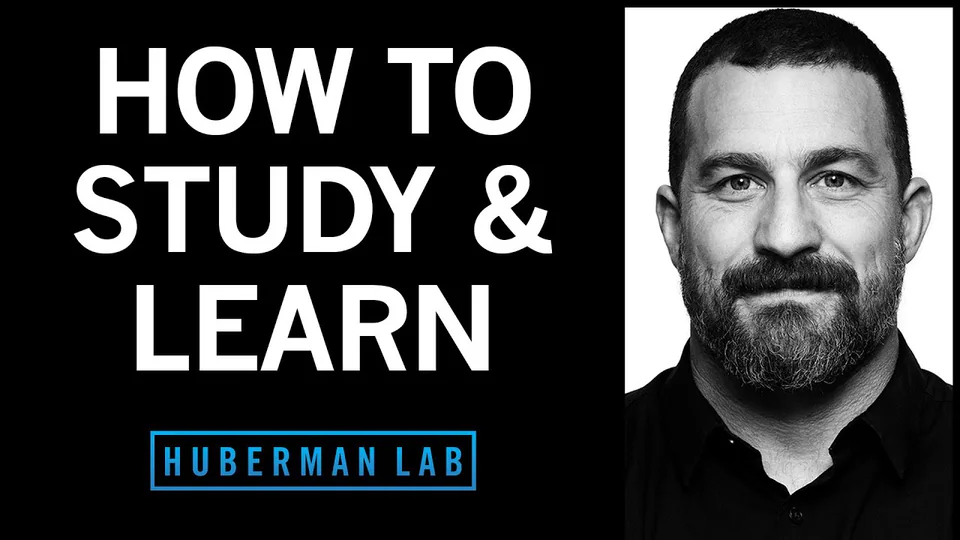
Optimal Protocols for Studying & Learning
Andrew Huberman · 3.6M views · 1h42m
Move from principles into a practical study routine: self-testing, focus blocks, sleep, NSDR, and learning gaps.
Understand & Improve Memory Using Science-Based Tools
Andrew Huberman · 1.2M views · 2h09m
Understand how memories are encoded, strengthened, and consolidated so review tools make more sense.
Science & Tools of Learning & Memory | Dr. David Eagleman
Andrew Huberman · 380K views · 2h24m
Zoom out to lifelong plasticity: novelty, challenge, practice, future-self commitments, and memory drift.
Frequently Asked Questions
Everything you need to know about brain hack: 6 secrets to learning faster, backed by neuroscience | lila landowski | tedxhobart.
Turn any YouTube video into notes like this.
Paste a YouTube link and get source-based notes, a mind map, quiz, flashcards, infographic, and podcast preview in minutes.