Structured Notes for David Eagleman on learning and memory
The long Huberman Lab conversation rewritten around the learning-science spine: plasticity, cortical flexibility, practice, novelty, future-self design, memory, and perception.
- Why Eagleman says experience wires the unfinished brain
- How practice, specialization, and novelty reshape cortical real estate
- How memory drift, time perception, and social models fit the same brain-modeling theme
Key takeaways
- Eagleman frames the human brain as arriving unfinished: DNA is only part of the story, while language, culture, practice, and environment wire the rest.
- Cortex is flexible and can be repurposed, which is why sensory loss, savantism, and skill practice all reveal how brain real estate gets reassigned.
- Practice turns slow conscious effort into efficient neural hardware, but that also means adults must keep seeking challenges instead of repeating only what is easy.
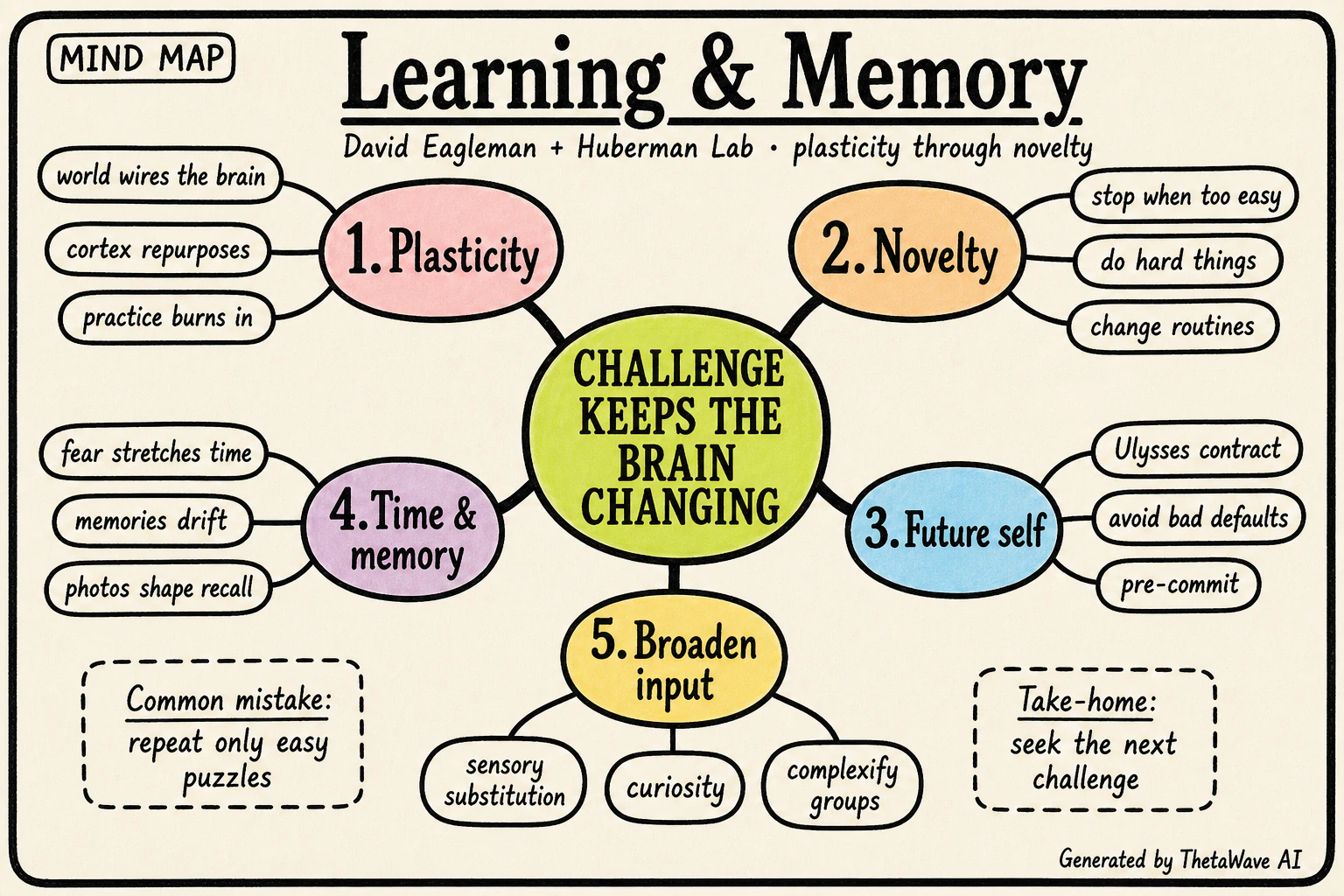
Mind Map — see Eagleman's plasticity framework at a glance
The map centers on challenge as the driver of continued change, then branches into plasticity, novelty, future self, time and memory, and broadened input.
- Keeps learning tools and broader neuroscience themes connected
- Highlights the source's cross-topic structure without turning it generic
- Useful for revisiting the long conversation fast
Quiz — test your grasp of novelty-driven plasticity
Active recall checks whether you understand why easy practice stops changing the brain, how Ulysses contracts work, and why memory can drift.
- True/False on easy repetition vs real challenge
- Short answers on cortex repurposing and future-self commitments
- Fixes explain Eagleman's examples from the conversation
“Doing easy puzzles and assuming the brain is still adapting” — is this a recommended approach?
Flashcards — review the Eagleman learning tools
Cards turn the conversation into repeatable study cues: find novelty, pre-commit for your future self, challenge perception, and treat memory as a model that can drift.
- One card for each practical idea in the conversation
- Back side ties the tool to the brain mechanism
- Designed for long-form podcast review
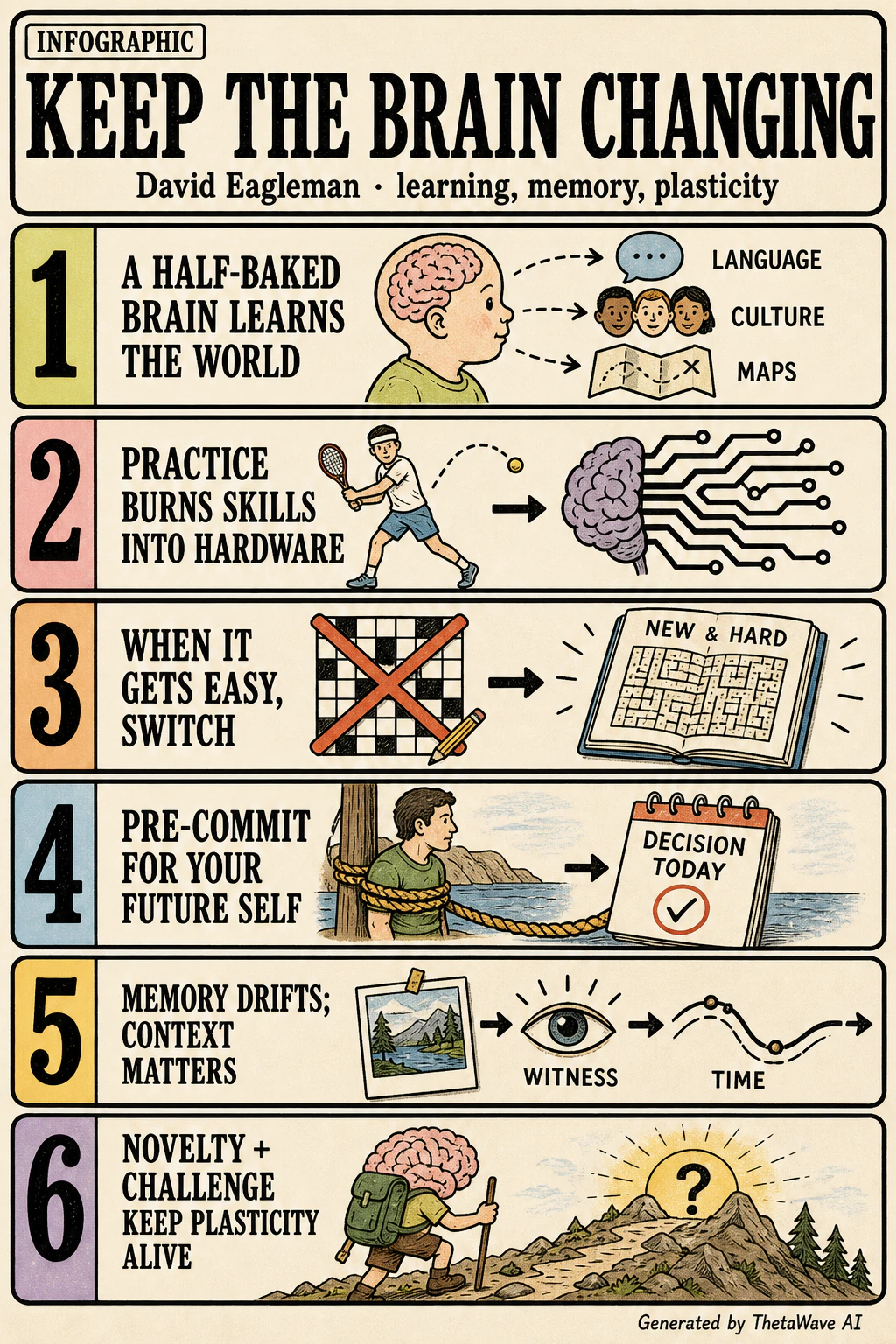
Infographic — a visual poster for keeping the brain changing
The poster shows the learning arc: unfinished brain, practice into hardware, switch when easy, pre-commit, memory drift, and novelty plus challenge.
- Shows why easy repetition is different from real plasticity
- Connects practice, future-self commitment, memory drift, and novelty
- Makes Eagleman's challenge-based learning advice easy to revisit
Podcast — listen to the Eagleman learning recap
A short two-host recap walks through Eagleman's main learning ideas without trying to cover every neuroscience tangent in the 2-hour interview.
- Explains plasticity, challenge, practice, and future-self design
- Keeps memory drift and time perception connected to learning
- Plays in your browser and stays based on the original interview
Science & Tools of Learning & Memory | Dr. David Eagleman
Host 1: Eagleman's starting point is that humans arrive with a half-built brain, and the world wires up the rest.
Host 2: That is why practice matters. It burns skills into more efficient circuitry, but it can also make you coast.
More notes for Learning Science
Same study format, different source. Compare how ThetaWave turns related material into notes, maps, quizzes, flashcards, and visuals.
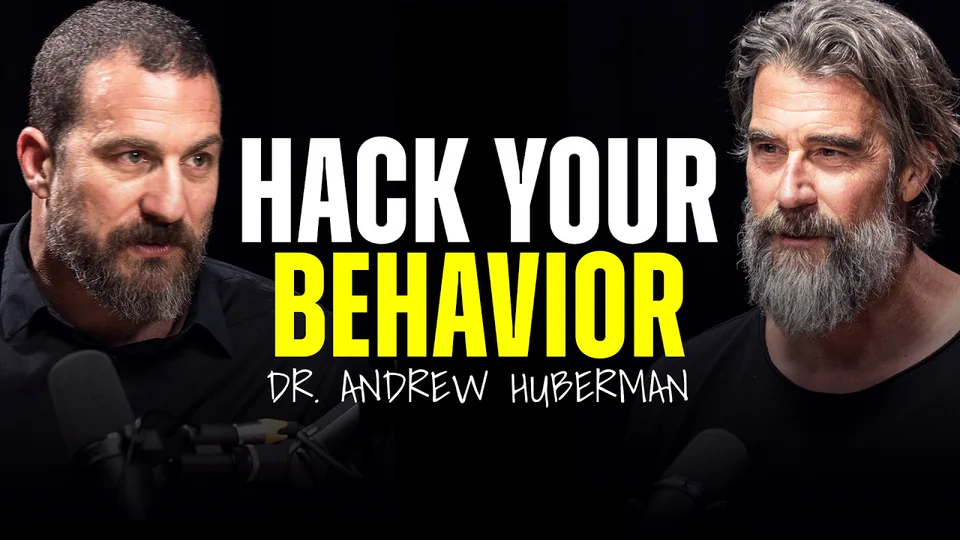
Change Your Brain: Neuroscientist Dr. Andrew Huberman | Rich Roll Podcast
Rich Roll · 18.4M views · 2h13m
Start with the big picture: how brain state, focus, dopamine, stress control, and deep rest shape behavior change.
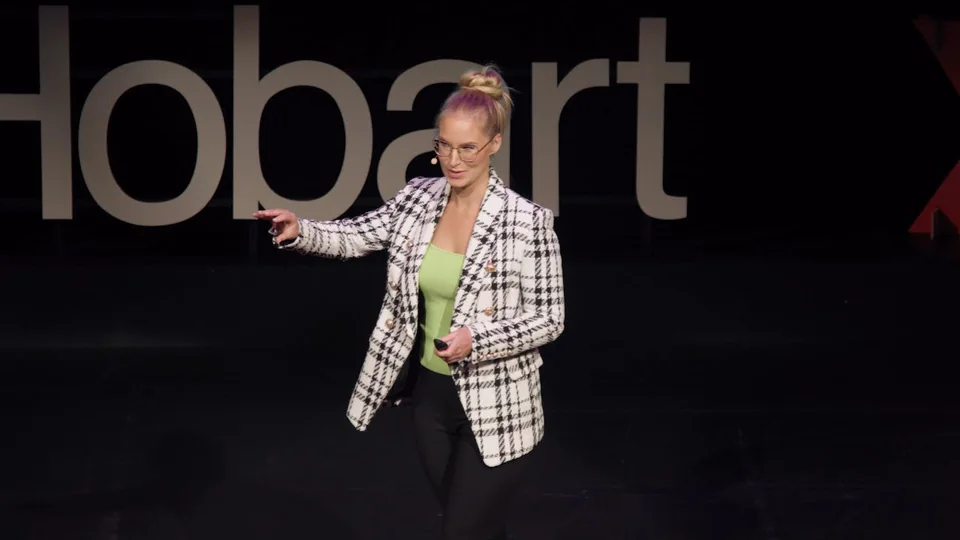
Brain Hack: 6 secrets to learning faster, backed by neuroscience | Lila Landowski | TEDxHobart
TEDx · 7.6M views · 18m
Turn learning science into six study conditions you can use before, during, and after a study session.
Optimal Protocols for Studying & Learning
Andrew Huberman · 3.6M views · 1h42m
Move from principles into a practical study routine: self-testing, focus blocks, sleep, NSDR, and learning gaps.
Understand & Improve Memory Using Science-Based Tools
Andrew Huberman · 1.2M views · 2h09m
Understand how memories are encoded, strengthened, and consolidated so review tools make more sense.
Frequently Asked Questions
Everything you need to know about science & tools of learning & memory | dr. david eagleman.
Turn any YouTube video into notes like this.
Paste a YouTube link and get source-based notes, a mind map, quiz, flashcards, infographic, and podcast preview in minutes.