Change Your Brain: Neuroscientist Dr. Andrew Huberman | Rich Roll Podcast
A 2-hour Rich Roll conversation with neuroscientist Andrew Huberman on how the brain changes - focus, dopamine, fear, deep rest, addiction, polarization, and self-regulation distilled into a study kit.
Structured Notes for Change Your Brain with Andrew Huberman
The long Rich Roll interview rewritten as a scannable outline: plasticity, focus, dopamine, flow, fear, deep rest, addiction, polarization, and self-regulation.
- Why brain change starts with nervous-system state
- How dopamine, process reward, and flow connect to motivation
- Why visual focus, deep rest, and self-regulation become practical tools
Key takeaways
- Huberman keeps returning to state: what you can perceive, learn, and do changes with arousal, attention, and self-regulation.
- Neuroplasticity is lifelong, but it is not automatic - it needs focused attention, repetition, and a nervous system state that can support change.
- Motivation is not just willpower. The dopamine system rewards seeking, process, progress, and flow, so the reward has to be attached to the behavior.
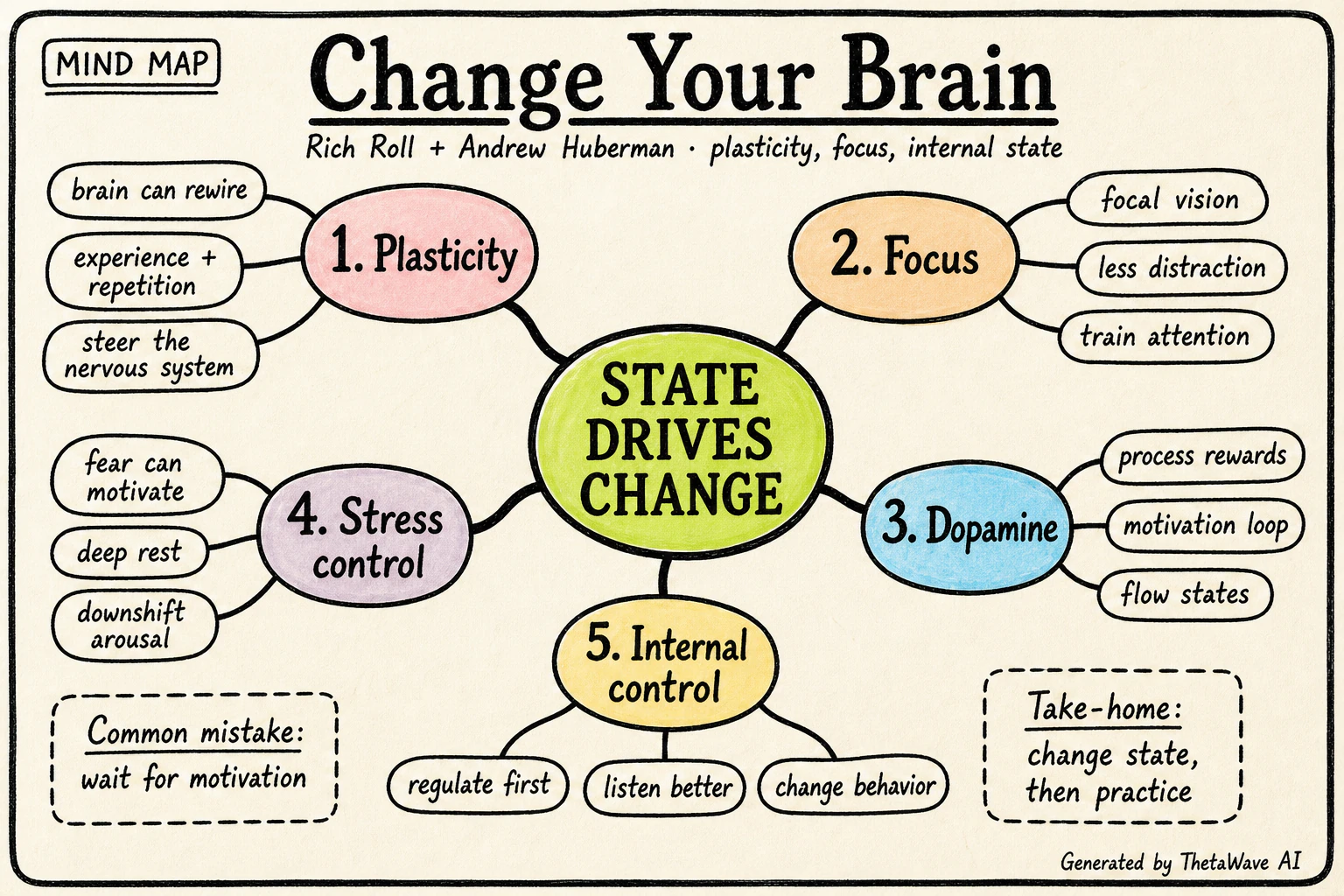
Mind Map — see the state-change framework at a glance
The mind map centers on one thesis from the conversation: state drives change. Branches cover plasticity, focus, dopamine, stress control, and self-regulation.
- Built from the video's actual chapter flow
- Separates attention tools from reward and stress tools
- Useful as a one-page review before applying the protocols
Quiz — test your grasp of brain-state tools
Active recall checks whether you can distinguish motivation, attention, arousal, rest, and plasticity instead of treating them as one vague self-improvement idea.
- True/False on myths like waiting for motivation
- Short answers on dopamine, focal vision, and autonomic control
- Fixes explain how the source frames behavior change
“Waiting for motivation before changing behavior” — is this a recommended approach?
Flashcards — repeat the practical nervous-system levers
Cards turn the conversation into study cues you can revisit: shift state, focus vision, reward process, recover with rest, and listen from lower arousal.
- One card per actionable tool from the discussion
- Back side explains the mechanism in plain language
- Built for review, not a generic transcript summary
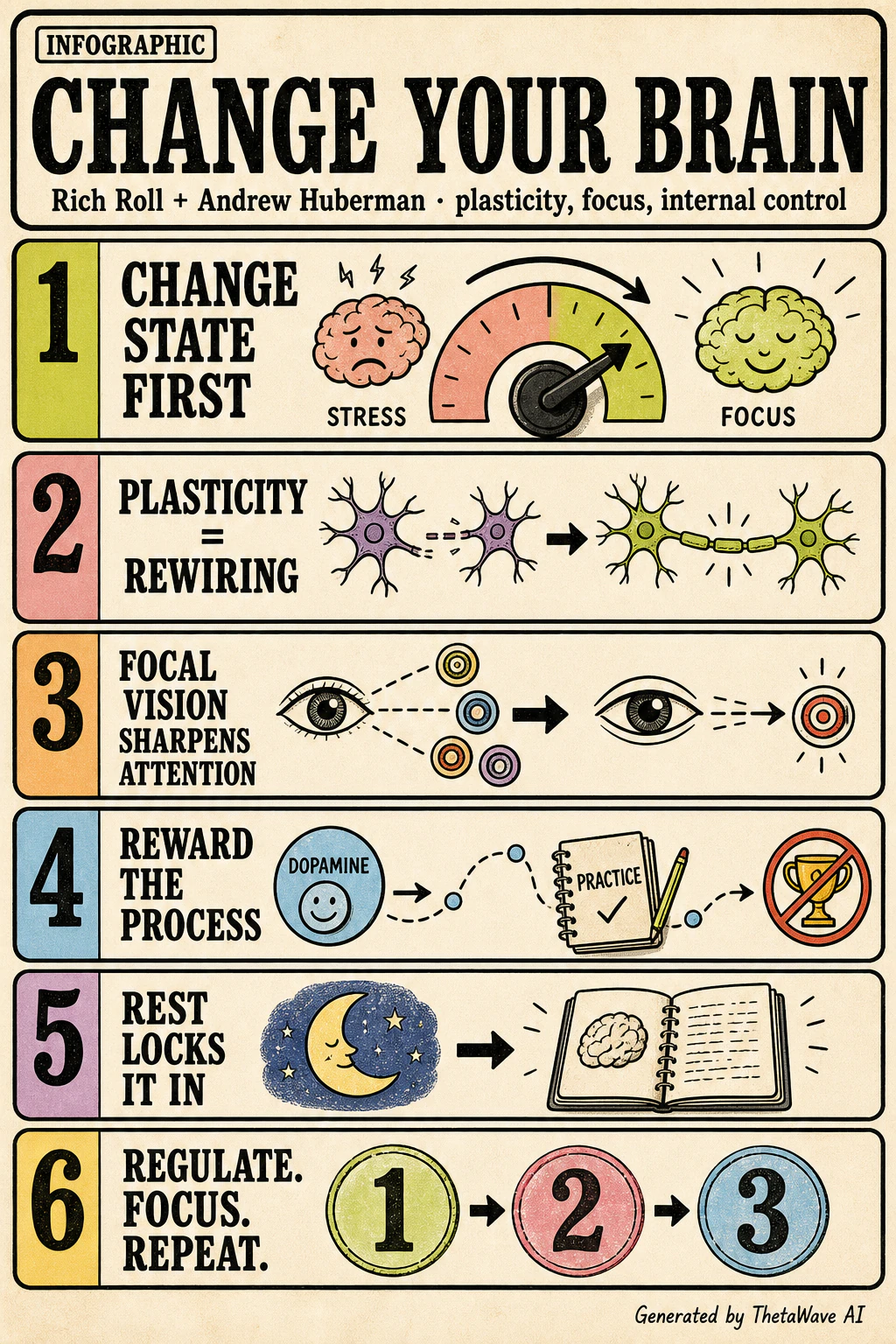
Infographic — a visual summary of changing brain state
The poster compresses the source into six panels: change state first, plasticity rewires, focal vision sharpens attention, reward the process, rest locks it in, regulate-focus-repeat.
- Shows the sequence from nervous-system state to focused practice
- Connects plasticity, dopamine, focal vision, and deep rest in one review sheet
- Keeps the takeaway simple: regulate, focus, repeat
Podcast — listen to the Rich Roll and Huberman recap
A short two-host recap walks through the interview's core logic so the long conversation becomes easier to review.
- Covers plasticity, dopamine, stress, rest, and self-regulation
- Keeps the source as a conversation, not a lecture outline
- Plays in your browser and stays based on the original video
Change Your Brain: Neuroscientist Dr. Andrew Huberman | Rich Roll Podcast
Host 1: The Rich Roll interview is not just a story about changing your life. Huberman keeps tying change back to nervous-system state.
Host 2: Right. Focus, stress, reward, rest - all of those change what the brain is ready to learn.
More notes for Learning Science
Same study format, different source. Compare how ThetaWave turns related material into notes, maps, quizzes, flashcards, and visuals.

Brain Hack: 6 secrets to learning faster, backed by neuroscience | Lila Landowski | TEDxHobart
TEDx · 7.6M views · 18m
Turn learning science into six study conditions you can use before, during, and after a study session.
Optimal Protocols for Studying & Learning
Andrew Huberman · 3.6M views · 1h42m
Move from principles into a practical study routine: self-testing, focus blocks, sleep, NSDR, and learning gaps.
Understand & Improve Memory Using Science-Based Tools
Andrew Huberman · 1.2M views · 2h09m
Understand how memories are encoded, strengthened, and consolidated so review tools make more sense.
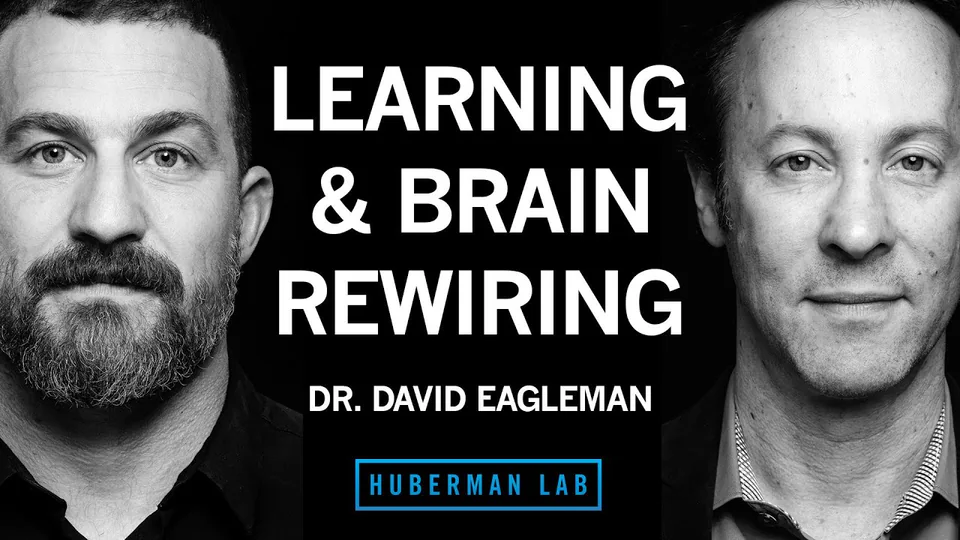
Science & Tools of Learning & Memory | Dr. David Eagleman
Andrew Huberman · 380K views · 2h24m
Zoom out to lifelong plasticity: novelty, challenge, practice, future-self commitments, and memory drift.
Frequently Asked Questions
Everything you need to know about change your brain: neuroscientist dr. andrew huberman | rich roll podcast.
Turn any YouTube video into notes like this.
Paste a YouTube link and get source-based notes, a mind map, quiz, flashcards, infographic, and podcast preview in minutes.