Structured Notes for Understand & Improve Memory
The episode rewritten as a clear outline: sensory encoding, context, repetition, adrenaline, sleep, NSDR, cold, exercise, snapshots, and meditation.
- Why memory is a replay bias in neural circuits
- How repetition and salience strengthen recall
- Which tools Huberman connects to consolidation and attention
Key takeaways
- Huberman defines memory as a bias in the likelihood that a chain of neurons will be activated again, not as a static file stored in the brain.
- Context matters: memory links events to surrounding sensory information, emotion, names, places, and timing.
- Repetition works because repeatedly co-activated neurons strengthen their connections; this is the practical point behind learning curves and Hebbian wiring.
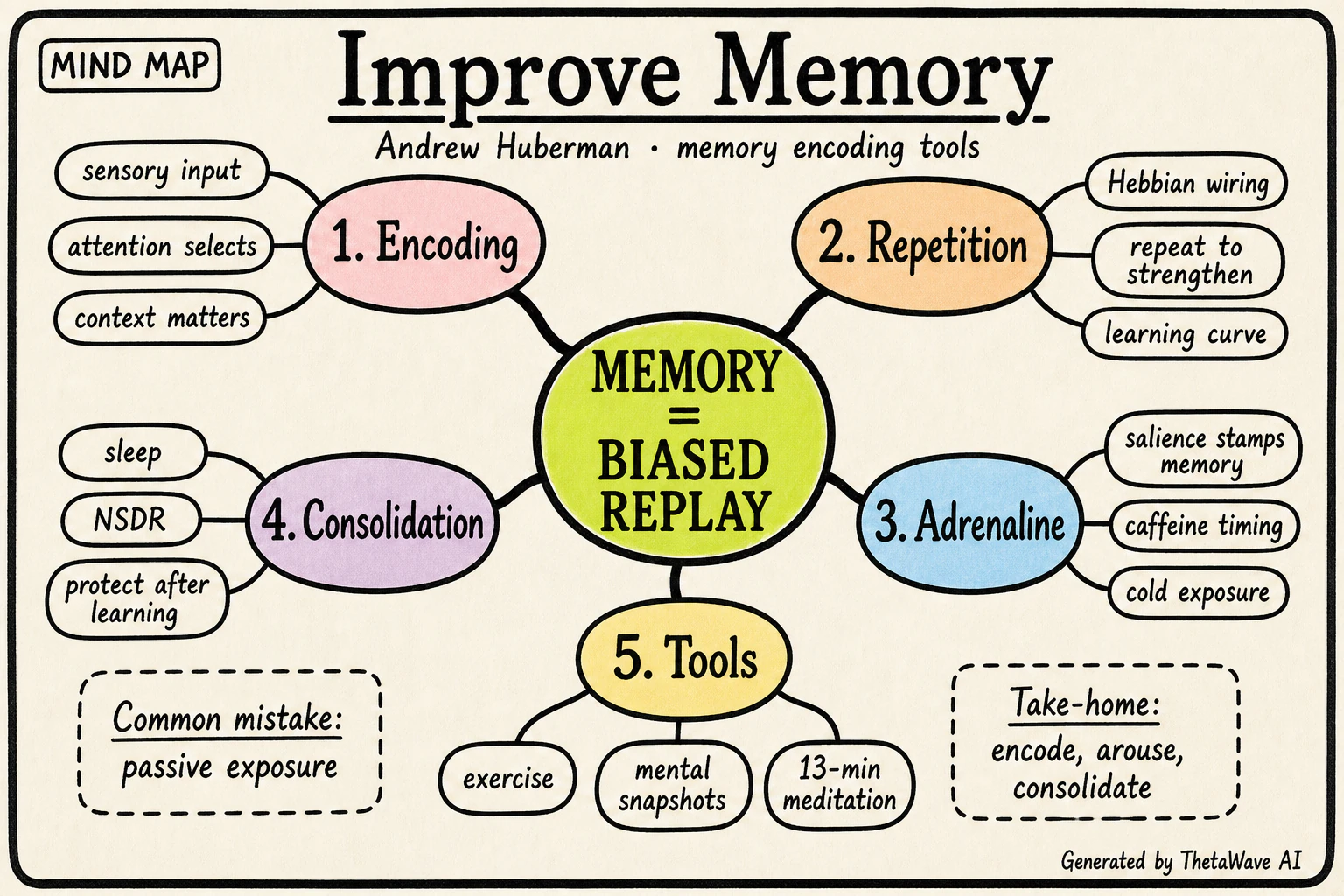
Mind Map — see the memory toolkit at a glance
The mind map organizes the episode around encoding, repetition, adrenaline, consolidation, and practical tools.
- Keeps the episode's mechanisms separate from the tools
- Makes sleep, NSDR, exercise, snapshots, and meditation easy to compare
- Uses short labels so the source structure is readable
Quiz — test your grasp of memory mechanisms
Active recall checks whether you can explain why repetition, salience, sleep, and attention affect memory instead of just naming the tools.
- True/False on passive exposure and photographic memory
- Short answers on adrenaline timing and sleep consolidation
- Fixes point back to the episode's mechanism-based explanations
“Assuming passive exposure creates durable memory” — is this a recommended approach?
Flashcards — remember the memory tools by mechanism
Cards pair each tool with the reason it works: repetition for circuit strength, adrenaline for salience, sleep and NSDR for consolidation, snapshots for visual encoding.
- One card per major tool from the episode
- Back side explains the memory mechanism in plain language
- Built for review before learning a dense topic
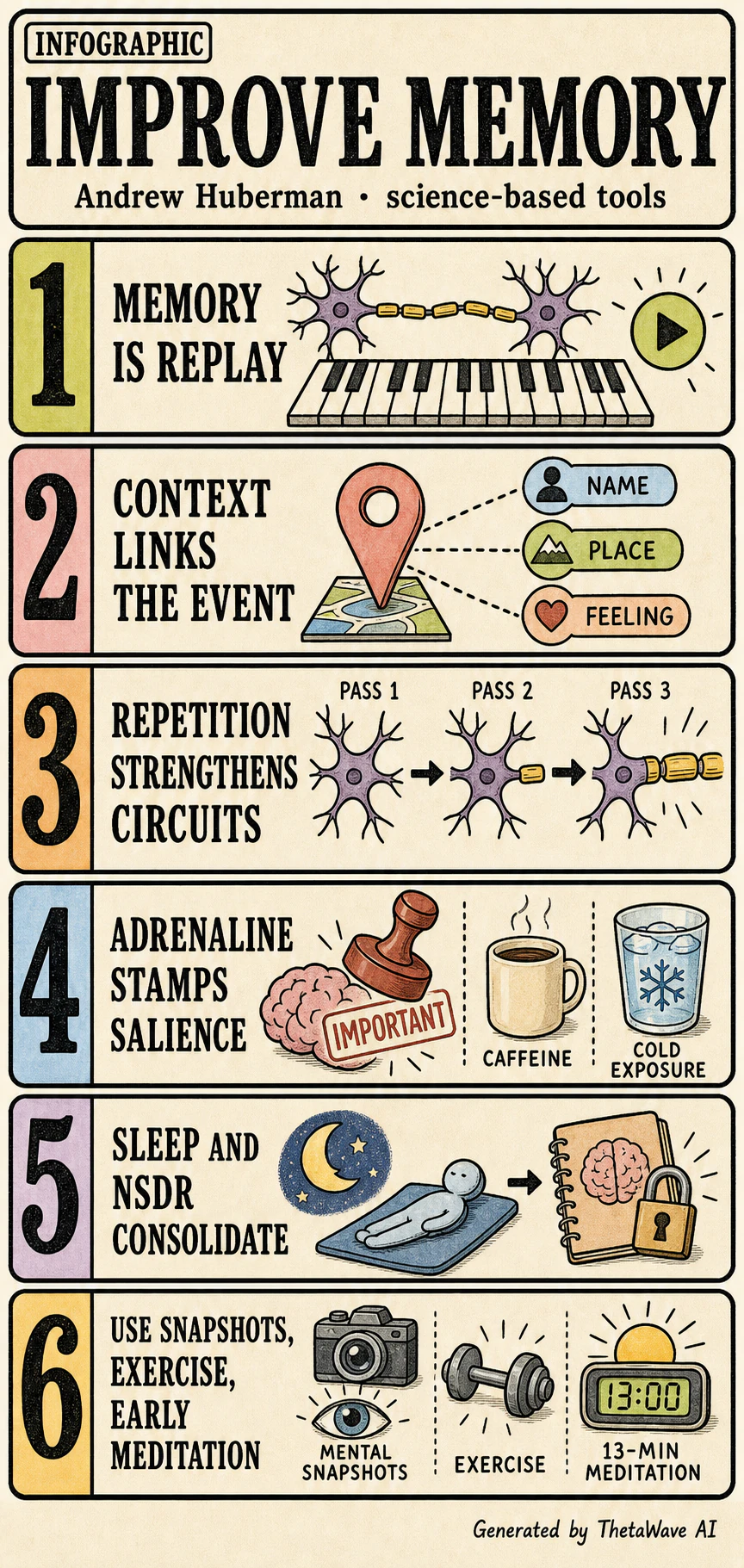
Infographic — a visual poster for improving memory
The infographic compresses Huberman's memory toolkit into six visual panels: replay, context, repetition, adrenaline, sleep/NSDR, and practical add-ons.
- Shows how memory moves from perception to later replay
- Connects repetition, adrenaline, sleep, NSDR, exercise, and meditation
- Helps separate encoding tools from consolidation tools
Podcast — listen to the memory toolkit recap
A two-host recap makes the 2-hour memory episode reviewable without flattening it into generic study tips.
- Explains memory as biased replay
- Covers repetition, adrenaline, sleep, NSDR, exercise, snapshots, and meditation
- Plays in your browser and stays based on the original episode
Understand & Improve Memory Using Science-Based Tools
Host 1: Huberman starts with a useful definition: memory is a bias in whether a chain of neurons will replay again.
Host 2: So repetition matters because repeated co-activation strengthens the circuit, but salience matters too.
More notes for Learning Science
Same study format, different source. Compare how ThetaWave turns related material into notes, maps, quizzes, flashcards, and visuals.
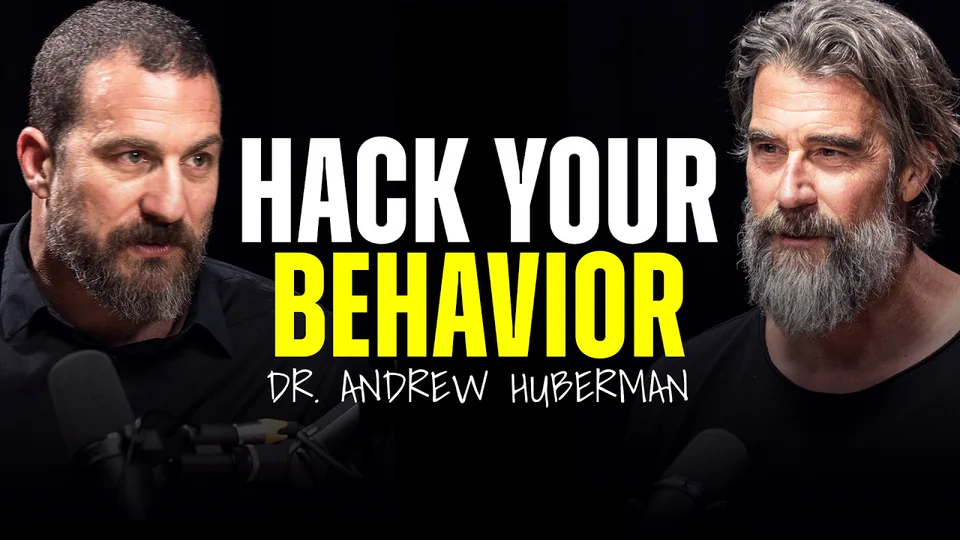
Change Your Brain: Neuroscientist Dr. Andrew Huberman | Rich Roll Podcast
Rich Roll · 18.4M views · 2h13m
Start with the big picture: how brain state, focus, dopamine, stress control, and deep rest shape behavior change.
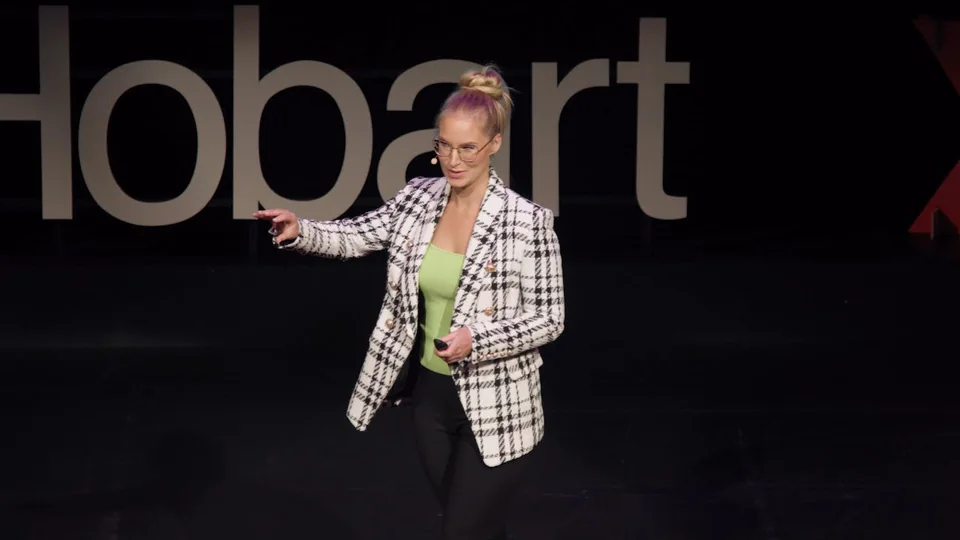
Brain Hack: 6 secrets to learning faster, backed by neuroscience | Lila Landowski | TEDxHobart
TEDx · 7.6M views · 18m
Turn learning science into six study conditions you can use before, during, and after a study session.
Optimal Protocols for Studying & Learning
Andrew Huberman · 3.6M views · 1h42m
Move from principles into a practical study routine: self-testing, focus blocks, sleep, NSDR, and learning gaps.
Science & Tools of Learning & Memory | Dr. David Eagleman
Andrew Huberman · 380K views · 2h24m
Zoom out to lifelong plasticity: novelty, challenge, practice, future-self commitments, and memory drift.
Frequently Asked Questions
Everything you need to know about understand & improve memory using science-based tools.
Turn any YouTube video into notes like this.
Paste a YouTube link and get source-based notes, a mind map, quiz, flashcards, infographic, and podcast preview in minutes.